Heartburn: Causes, Triggers & What You Can Do

A burning pain behind the breastbone or acid reflux after eating – heartburn is extremely common and often very uncomfortable. Whether caused by stress, an unhealthy diet, or as a hidden side effect of your medication: here you'll learn how to identify your symptoms, what helps immediately in everyday life, and how to use brite to check whether your medicines are causing the burning sensation.

Better understand heartburn

Quick & important:
What you can do right now

If you're currently experiencing acute heartburn, these steps will help relieve the oesophagus immediately:

Sit up straight:

Sit upright or raise the head of your bed. Gravity keeps stomach acid down.

Lie on your left side:

If you need to lie down, do so on your left side. In this position, the stomach opening sits higher than the stomach contents.

Rinsing effect:

Take a few small sips of still water or lukewarm tea to flush the acid out of the oesophagus.

Check:

Did you take medication on an empty stomach, or are you also experiencing chest pain?

Loosen tight clothing:

Immediately loosen your belt or any tight clothing around your abdomen to reduce pressure on the stomach.
Important: If the pain is severe, radiates into your arm, or you experience shortness of breath: call emergency services immediately (999/112) – this could be confused with a heart attack.

What is heartburn – and what does it typically feel like?

Heartburn (reflux) occurs when the sphincter muscle between the oesophagus and the stomach does not close properly. Stomach acid rises and irritates the sensitive lining. This usually manifests as a burning pain behind the breastbone that can radiate up into the throat. It is often accompanied by acid regurgitation, a feeling of pressure in the upper abdomen, or chronic irritable cough.

Common causes and triggers of heartburn

Why does it burn in the chest? These factors are particularly common in everyday life:

Diet & eating habits

Large, fatty meals, spicy foods, coffee, and alcohol stimulate acid production and loosen the gastric sphincter. Eating late, right before bedtime, is also a classic trigger.

Heartburn at night and when lying down

When lying flat, the natural protective effect of gravity disappears. Sleeping flat risks acid irritating the oesophagus throughout the night. This often leads to hoarseness or a sore throat in the morning.

Stress & psychosomatic factors

Under stress, the stomach often produces more acid (known as a "stress stomach"), while digestion slows down at the same time.

Medications as "acid triggers"

A critical point: many medications (e.g. certain painkillers, osteoporosis drugs, or cardiac preparations) can irritate the mucosal lining or weaken the sphincter muscle. Heartburn is often a direct consequence of certain drug combinations.

Is your medication to blame? Get clarity now

Especially if heartburn occurs regularly, you should review your medication. brite helps you bring structure to the analysis:


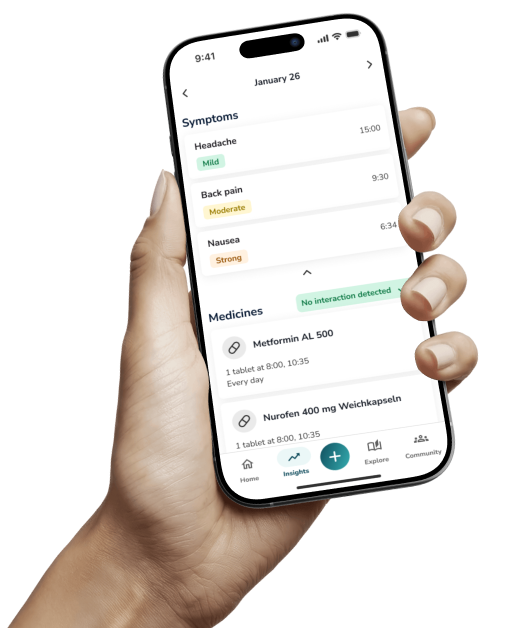
Digital medication plan: Track all your medications and immediately spot whether the burning correlates with a new intake or dosage change.
Interaction check: Find out whether your medications are influencing each other and thereby stimulating stomach acid production.
Intake reminder: Prevent medication errors and ensure that medicines prescribed "with food" are actually taken in a stomach-friendly way.

When should you get heartburn checked out? (Warning signs)

Heartburn is usually harmless, but you should see a doctor if:

symptoms occur more than twice a week.
you have difficulty swallowing or feel like food is getting stuck.
you are losing weight unintentionally.
warning signs such as black stools (tarry stools) or bloody vomiting occur.
symptoms persist for weeks despite home remedies.

Preparing for your doctor's appointment – Your checklist

To help your doctor quickly identify the cause, prepare the following information:

Frequency:

When exactly does the burning occur? (At night, after exercise, after coffee?)

Accompanying symptoms:

Do you also have nausea or a cough?

Position:

Does it get worse when lying down or bending over?

Medications:

Bring your complete list from the brite app – especially painkillers (NSAIDs) are crucial for your doctor!

How brite helps you stay on top of things

brite brings structure to your observations and helps you find the cause of your heartburn:

Central medication plan for maximum transparency at your doctor's appointment.
Check for interactions in cases of gastrointestinal complaints.
Frequently Asked Questions about Heartburn
What helps immediately without tablets?
Can I drink coffee when I have heartburn?
Why is heartburn at night dangerous?
Can painkillers cause heartburn?
Does milk help with heartburn?
Wie kann mich der digitale Behandlungsbereich von
Welche Funktionen bietet mir der digitale Behandlungsbereich?
Woher kommen die Informationen und Inhalte?
Kann ich meine Ergebnisse auch mit meinem Arzt/meiner Ärztin teilen?
Sind meine Daten sicher?