Skin rash: Causes, allergy & when to see a doctor

Skin rashes often appear suddenly and cause immediate anxiety. Whether itchy redness, burning blisters, or migrating welts: the skin reflects your health and reacts sensitively to external stimuli, infections, or internal processes. Here you'll learn how to classify your symptoms, what really helps in everyday life, and how to use brite to check if your medication or a new combination is causing the skin changes.
Better classifying skin rash

In short & important: What you
can do right now

If your skin is currently irritated or itchy, these steps will help provide initial relief:

Gentle cooling

Cool compresses with water or black tea (which has anti-inflammatory properties) will relieve the itching immediately.

Care break

Do not test new creams "against" the rash. Use only tried and tested, fragrance-free basic skincare products.

Eliminate stimuli

Avoid perfumed shower gels, hot baths, and tight clothing made of wool or synthetic fibers.

Check

Have you started a new medication, or are you also suffering from fever or swelling?

Scratch stop

Try not to injure the skin. Short fingernails and light cotton gloves (at night) protect against infection.
Important: In case of shortness of breath, swelling of the lips or tongue, or circulatory problems: Call emergency services (112) immediately (risk of anaphylactic shock).

Understanding skin rashes – Why the pattern is crucial

A skin rash (exanthem) is a complex symptom. The skin reacts either directly at the point of contact (contact allergy) or shows a reaction of the entire immune system. For a diagnosis, it is crucial to know: Where did it start? Does it itch or burn? Are there hives that disappear after a few hours? A precise photo diary and documentation of your diet and medication are key to distinguishing between a simple irritation and a serious allergic reaction.

Common causes of skin rash

What makes your skin react? These triggers are often behind everyday life:

Allergy & Hypersensitivity

Whether it's pollen, nickel, pet hair, or detergent – ​​in an allergy, the immune system classifies harmless substances as a threat. The result is often a severely itchy rash with redness or small blisters.

Hives (urticaria)

Typical symptoms of urticaria include the sudden appearance of bright white welts (similar to those after contact with stinging nettles). They itch intensely and can appear and disappear within minutes.

Infections & Childhood Diseases

Many viruses cause typical rashes. Scarlet fever often manifests as pinhead-sized red spots, while common cold viruses often cause a more diffuse, patchy rash.

Stress & psychosomatic reactions

Stress releases messenger substances that can exacerbate inflammation in the skin. Existing conditions such as eczema or psoriasis often flare up significantly during periods of stress.

Medications as "rash triggers"

A highly relevant factor: A drug eruption can occur immediately or only days after taking the medication (especially with antibiotics). Often, however, it is also interactions between your regular medication and a new drug that cause the skin to "break out."

Is it due to your medication? Get to the bottom of it now.

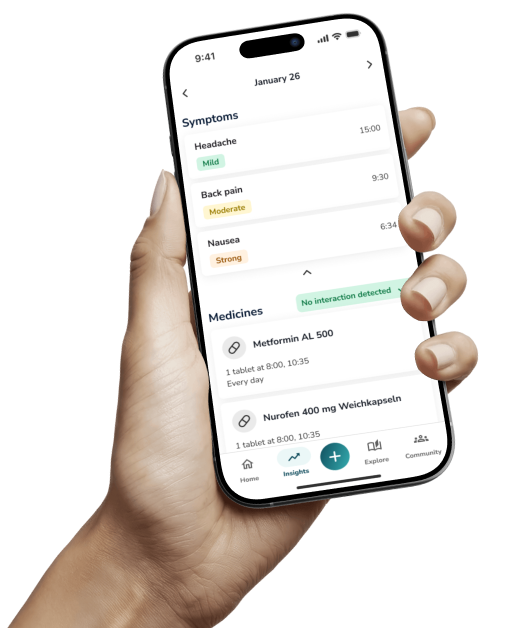
Especially with a new skin rash, you mustn't neglect your medication. brite helps you bring structure to the analysis:


Digital medication plan : Record all medications and immediately see if the rash correlates with a new prescription or dose change.
Drug interaction check : Find out if your combination of medications increases the risk of skin reactions.
Medication reminder : Make sure you take your medication (e.g., antibiotics) at the correct intervals to support tolerability.

When should you see a doctor if you have a skin rash? (Warning signs)

Please take skin changes seriously and consult a doctor if:

the rash appears very suddenly and over a large area.
you also have fever, chills or body aches.
Mucous membranes (mouth, eyes, genital area) are affected or blisters form.
Swelling of the face (edema) may occur.
the rash is painful or the skin is peeling off.

Checklist for your doctor's appointment – ​​your information counts

To help your doctor quickly find the cause, prepare this information:

Timeline

When exactly did the first spot appear, and what did you take or use 24 hours before?

Feeling

Does it itch unbearably, or does it feel more like a burning sensation or sunburn?

Distribution

Is the rash only in one spot or all over the body?

Medications

Bring your complete list from the Brite app – especially antibiotics, painkillers and new vitamins are crucial!

How Brite helps you keep track of everything

brite brings structure to your observation and helps you find the trigger:

Centralized medication plan for maximum safety during doctor's visits.
Examination of interactions in skin reactions.
Stable routines thanks to the medication reminder.
Frequently asked questions about skin rashes
What helps quickly against a sudden skin rash?
How can I recognize an allergic skin rash?
Can stress really cause a skin rash?
How long does a skin rash last after taking antibiotics?
Can medication trigger a skin rash that I previously tolerated?
Wie kann mich der digitale Behandlungsbereich von
Welche Funktionen bietet mir der digitale Behandlungsbereich?
Woher kommen die Informationen und Inhalte?
Kann ich meine Ergebnisse auch mit meinem Arzt/meiner Ärztin teilen?
Sind meine Daten sicher?