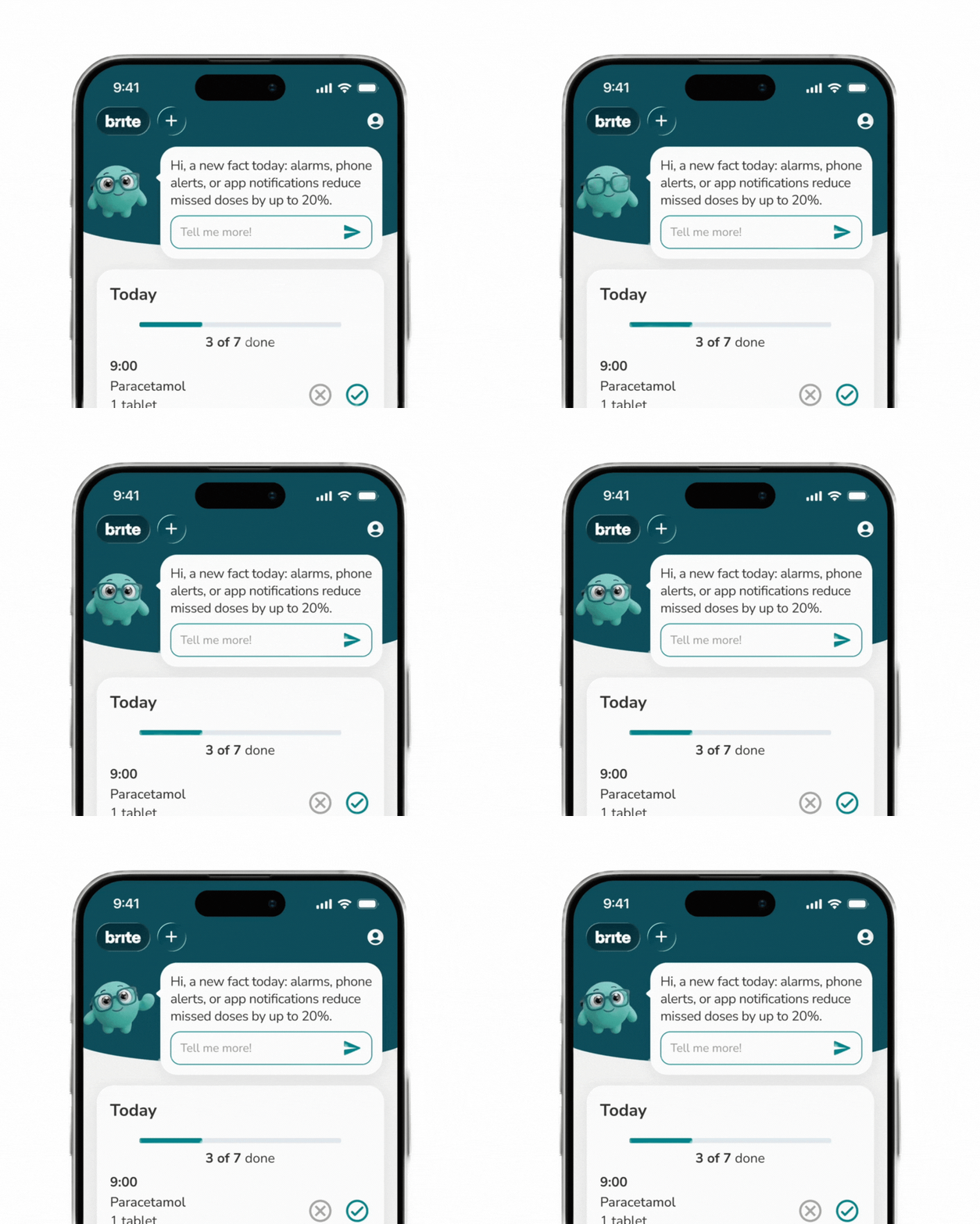
I finally understand my therapy. The app reminds me, answers my questions — and I don't feel alone with it anymore.
Anastrozole
Anastrozole: Joint Pain and Bone Density on the Aromatase Inhibitor
Anastrozole is an aromatase inhibitor and is used after the menopause for hormone-sensitive breast cancer, usually for five years. It lowers the amount of oestrogen in the body almost completely — this slows the tumour but also affects the joints and bones. Joint pain and a loss of bone density are the two side effects on which treatment most often stumbles. Both can be recognised, treated and often brought under good control.
Non-steroidal aromatase inhibitor; endocrine (anti-hormonal) cancer therapy
Dosage forms
Film-coated tablets of 1 mg
Half-life
About 40 to 50 hours according to the SmPC; a steady level is reached after around one week
Maximum daily dose
1 mg once a day — a dose increase is not intended
Onset of effect
The oestrogen level falls markedly within a few days; the actual benefit, fewer relapses, shows over years
Prescription status
Prescription-only medicine
Notable feature
Only effective after the menopause; lowers bone density, joint pain is very common. Do not use together with tamoxifen or oestrogens
Table scrolls to the right
2. How it works: turning off the last oestrogen tap
In most breast cancers, the tumour cells carry docking sites for oestrogen — the tumour is hormone receptor-positive, and oestrogen acts on it like a growth signal. Anti-hormonal therapy is meant to switch off this signal. There are two ways of doing this: tamoxifen blocks the docking sites, while aromatase inhibitors such as anastrozole ensure that hardly any oestrogen is produced any more. What defines tamoxifen and why it works differently is explained in our article on tamoxifen; here the focus is on the particular features of the aromatase inhibitor.
After the menopause, the ovaries produce hardly any oestrogen. Even so, it does not disappear completely: in fatty tissue, muscles and other tissues, the enzyme aromatase converts male hormone precursors into oestrogen. Anastrozole blocks precisely this enzyme. According to the SmPC, 1 mg a day lowers the oestradiol level in postmenopausal women by more than 80 per cent.¹
Both the benefit and the side effects follow from this:
Benefit: individual tumour cells that may have remained unnoticed in the body after surgery and radiotherapy no longer receive a growth signal. In the large ATAC study, anastrozole after the menopause was superior to tamoxifen in terms of disease-free survival.¹
Joints and tendons: oestrogen influences cartilage, tendons and the way pain is processed. If it falls away almost completely, many women react with joint pain and stiffness (section 6).
Bones: oestrogen slows down bone loss. Without this protection, bone density decreases and the risk of fractures rises (section 7).
Menopausal symptoms: hot flushes, vaginal dryness and mood swings can occur or get worse.
Why only after the menopause? Before the menopause, most oestrogen comes from the ovaries. If aromatase is blocked there, the pituitary gland responds with more stimulation — the ovaries work against the medicine. The SmPC therefore states clearly: anastrozole should not be used in premenopausal women.¹
3. Dosing and length of treatment
The following information reflects the SmPC and the guideline. It is not a dosing instruction — which anti-hormonal therapy, in which order and for how long is decided by the treatment team.¹,²
Dose: 1 mg once a day, without a gradual start and without increases — also for older women.
Licensed uses according to the SmPC: follow-up treatment (adjuvant therapy) of hormone receptor-positive early breast cancer after the menopause, including after two to three years of tamoxifen, and hormone receptor-positive advanced breast cancer after the menopause.
Duration: for follow-up treatment, the SmPC gives five years. Whether extended anti-hormonal therapy makes sense afterwards is weighed up individually according to the guideline, based on the risk of relapse and tolerability.²
Sequencing strategies: some women start with tamoxifen and switch to an aromatase inhibitor after a few years, others the other way round, or they stay on one active ingredient. The two are not given at the same time.
Kidney and liver impairment: with mild or moderate kidney impairment and with mild liver impairment, no adjustment is needed; with severe kidney impairment and moderate to severe liver impairment, the SmPC advises caution.¹
The duration is part of the effect. The studies on which the benefit is based assume that the tablet is taken for years. If side effects bring you to the point of wanting to stop, that is no reason to quietly stop taking it, but a reason to talk: switching within the drug group or targeted treatment of the complaints often helps. More on sticking with treatment over years in the tamoxifen article.
4. Taking it in everyday life
One tablet, fixed time. According to the SmPC, food only slightly delays absorption, with no effect on the level when taken daily.¹ Whether morning or evening is secondary — what matters is taking it at the same time every day.
Missed dose: do not take a double dose; carry on with the next regular dose. Thanks to the long half-life, a single gap hardly matters; many gaps over months, on the other hand, do. More under missed a medication.
Repeat prescription in good time. Five years means around 1,800 tablets — gaps usually arise from an empty pack before holidays or bank holidays.
Bone density appointment at the start. When treatment begins, ask for a bone density scan and a baseline bone assessment (section 7), and ask to be given the results.
Plan in exercise. Regular exercise is the most effective thing you can do yourself for your joints and bones. Ideas in the guide medications and exercise.
Tiredness and driving. According to the SmPC, anastrozole usually has no or hardly any effect on the ability to drive. However, weakness and sleepiness have been reported — as long as these persist, caution is needed when driving.¹
Record your joint pain before you give up
A symptom diary shows at your follow-up appointment when and how badly it hurts — the basis for any solution.
The SmPC names headache, hot flushes, nausea, skin rash, joint pain and stiffness, joint inflammation (arthritis) and weakness as the most frequently reported side effects.¹ Many of them resemble menopausal symptoms and are strongest in the first few months.
Very common (more than 1 in 10)
Joint pain and stiffness, arthritis: the side effect that most often weighs on treatment (section 6).
Hot flushes, headache, nausea, skin rash, weakness: often most pronounced at the beginning.
Depression: the SmPC lists it as very common. Low mood after cancer has many causes — it should be raised and it can be treated; more under depression.
Common (up to 1 in 10)
Bones and muscles: osteoporosis, bone pain, muscle pain.
Nerves:carpal tunnel syndrome (tingling and numbness in the fingers, especially at night), sleepiness, abnormal sensations, taste disturbances.
Hair and skin: thinning hair, allergic reactions.
Intimate area:vaginal dryness, vaginal bleeding — the latter mainly in the first weeks after switching from another hormone therapy.
Metabolism and lab values: raised cholesterol, loss of appetite, changed liver values; also diarrhoea and vomiting.
Uncommon to very rare
Trigger finger (a finger gets stuck when bending and then snaps), raised calcium level, hepatitis, hives.
Rare to very rare, but serious: severe skin reactions such as erythema multiforme or Stevens-Johnson syndrome, anaphylactic reactions, angioedema, inflammation of the blood vessels of the skin.
Frequency not known: tendon inflammation and tendon rupture, dry eyes, impaired memory.
When you need help immediately. Swelling of the face, lips or tongue with shortness of breath, widespread peeling of the skin or blisters with fever are emergencies: call 112 (emergency number in Germany) immediately. A sudden, severe pain in a tendon — for example at the heel — with loss of strength should be checked by a doctor on the same day; the same applies after a fall with severe pain in the hip, wrist or back, because the bones are more prone to fracture on anastrozole.
6. Joint pain on an aromatase inhibitor: what helps
If you complain on anastrozole of aching hands, stiff fingers in the morning and knees that protest when you stand up, you are in good company. In the ATAC study, 35.6 per cent of women on anastrozole reported joint pain or stiffness — compared with 29.4 per cent on tamoxifen.¹ These figures include complaints that are common with age anyway. But the difference shows that the aromatase inhibitor noticeably increases them.
How the complaints typically show up
Where: often the fingers, hands, wrists, knees, hips and feet, often on both sides. More on how to interpret this under joint pain.
When: often in the first months of treatment; morning stiffness that improves with movement is typical.
What can be part of it: carpal tunnel syndrome, trigger finger, tendon irritation and muscle pain.
What is not part of it: a single hot, badly swollen joint, fever or persistent bone pain in one place. This needs to be checked separately.
What can help — honestly assessed
There is no miracle cure. But various approaches help many women, and a combination often works best.²,³
Exercise. Regular training — endurance, strength, flexibility — is among the best-studied measures and can ease the complaints. The effects are moderate, but exercise also benefits bones, mood and weight.
Allow time in the morning. A warm shower, a few minutes of finger exercises, a slow start — the stiffness usually eases after getting up.
Painkillers, targeted and for a limited time. Paracetamol or anti-inflammatory medicines such as ibuprofen can bridge difficult phases. With long-term use, anti-inflammatories put a strain on the stomach, kidneys and circulation — duration and dose should be agreed; background in painkillers compared.
Have your vitamin D status checked. A deficiency is common and makes bone and muscle complaints worse. Whether a supplement is needed is shown by the lab value; more under vitamin D.
Switching the active ingredient. If, despite everything, the pain dominates everyday life, the treatment team can switch to another aromatase inhibitor (letrozole or exemestane) or to tamoxifen. Many women tolerate the replacement better — there is no guarantee.
Don't pause in secret. Joint pain is one of the most common reasons for ending anti-hormonal therapy early. Yet there are usually alternatives — but only if the treatment team knows about the problem. Bring specific notes to your appointment: which joints, how long the morning stiffness lasts, what helps and what doesn't. The basics are in the guide stopping medications.
Acupuncture and supplements are also often tried. For acupuncture, there are study findings suggesting moderate relief; for supplements, the evidence is thin. Be careful with herbal products with an oestrogen-like effect — they can run counter to the way anastrozole works (section 8).
7. Bone density: measure, protect, treat
Oestrogen is one of the most important protective factors for the bones. Because anastrozole sharply lowers the oestrogen level, according to the SmPC it can reduce bone density and increase the risk of fractures.¹ In the ATAC study, 10.2 per cent of women on anastrozole had a fracture during the observation period, compared with 6.8 per cent on tamoxifen; osteoporosis was found in 10.5 versus 7.3 per cent. The SmPC puts this in context: the fracture rate on anastrozole roughly matched that of women of the same age — tamoxifen tends to protect the bones, which partly explains the difference.¹
The good news: the bone loss is known, measurable and treatable. The German osteoporosis guideline explicitly lists aromatase inhibitors as a risk factor and recommends offering a baseline bone assessment when treatment starts — also for women under 70.⁴ After the end of treatment, analyses no longer observed an increased risk of fractures.⁴
What happens at the start and during treatment
Bone density scan (DXA): at the start as a baseline value and at regular intervals depending on the result and risk factors. The SmPC explicitly requires this for women with osteoporosis or an increased risk of osteoporosis.¹
Recording risk factors: previous fractures, cortisone treatment, being underweight, smoking, a parent with a hip fracture, falls. The guide medications and osteoporosis risk gives an overview.
Lab values: including calcium and vitamin D, as decided by the practice.
What protects the bones
Weight-bearing exercise: walking, strength training and balance exercises strengthen bones and muscles and lower the risk of falls.
Calcium and vitamin D: enough from your diet, supplemented if needed — in the SABRE study on bone density on anastrozole, all participants received vitamin D and calcium.¹
Medicines against bone loss: with an increased risk of fractures, bisphosphonates such as alendronic acid or denosumab come into question. The osteoporosis guideline recommends offering women with breast cancer on aromatase inhibitor therapy bone-protecting treatment with denosumab or bisphosphonates, unless a bisphosphonate is already being given for oncological reasons.⁴
Fall prevention: remove trip hazards, good lighting, sturdy footwear, have your eyesight checked — and critically review medicines that make you dizzy.
Before bone-strengthening medicines: see the dentist. Bisphosphonates and denosumab can, rarely, lead to damage to the jawbone. A dental check-up before starting and good oral hygiene lower the risk. Dental procedures should always be planned with a note about these medicines.
For background on the condition itself, read our article on osteoporosis. There you will also find out how a bone density scan works and what the T-score means.
8. Interactions
Anastrozole has comparatively few interactions. According to the SmPC, clinically relevant interactions mediated by liver enzymes are unlikely; no clinically significant interactions have been observed with bisphosphonates either.¹ Unlike with tamoxifen, the enzyme CYP2D6 plays no role here — antidepressants such as paroxetine or fluoxetine do not slow anastrozole down. The most important points concern anything that runs counter to the way it works.
Combination
Consequence
What to do
Tamoxifen (at the same time)
Can reduce the effect of anastrozole; in the ATAC study the combination brought no advantage
One after the other rather than at the same time, as planned by the team
Medicines containing oestrogen, e.g. estradiol for hormone replacement therapy
Cancels out the way it works — anastrozole is meant precisely to remove oestrogen
Avoid according to the SmPC; vaginal products too only after consulting the treatment team
Herbal remedies with an oestrogen-like effect (red clover, high-dose soy isoflavones)
Safety in hormone-sensitive breast cancer is unclear
No clinically relevant interaction; protect the bones
Are often deliberately combined
Anti-inflammatory painkillers (for joint pain)
No direct interaction, but their own risks with long-term use
Use for a limited time and as agreed
Alcohol
No known direct interaction, but an independent risk factor for breast cancer and osteoporosis
Drink as little as possible
Table scrolls to the right
In everyday life, the risk lies less in a single combination than in the course of the years: someone recommends a “natural” product for hot flushes, a hormone cream is prescribed for vaginal dryness, and a long-term painkiller is added for the joint pain. An up-to-date medication plan and an interaction check before every new medicine keep track of everything — supplements included. More on hormonal products in the guide hormone replacement therapy.
9. Anastrozole or tamoxifen: the differences
Both active ingredients lower the risk of relapse in hormone-sensitive breast cancer, and both are taken for years — but their side effect profiles differ considerably. The ATAC study compared the two directly; the anastrozole SmPC lists the predefined adverse events.¹
Event (ATAC study)
Anastrozole
Tamoxifen
Joint pain/stiffness
35.6%
29.4%
Fractures
10.2%
6.8%
Hot flushes
35.7%
40.9%
Vaginal bleeding
5.4%
10.2%
Vaginal discharge
3.5%
13.2%
Venous thromboembolism
2.8%
4.5%
Cancer of the lining of the womb (endometrial cancer)
0.2%
0.6%
Table scrolls to the right
Put simply: tamoxifen tends to burden the veins and womb, anastrozole the joints and bones. Which therapy fits depends on the tumour's characteristics, menopausal status, other conditions and personal risks — someone who has already had a thrombosis, for example, has different priorities from someone with osteoporosis. The decision is made by the treatment team together with you.²
Anastrozole, letrozole, exemestane
The three aromatase inhibitors are regarded as comparably effective in follow-up treatment. Anastrozole and letrozole are non-steroidal, while exemestane has a steroid-like structure. If one is not tolerated, a switch within the group is sometimes made — whether that helps varies from person to person.
10. Special situations: before the menopause, liver, kidneys, cholesterol
Unclear menopausal status: anastrozole should not be used before the menopause. If it is unclear whether the menopause is complete — for example after chemotherapy that has made periods stop, or after removal of the womb — the SmPC says the menopause should be confirmed with a blood test (LH, FSH, oestradiol).¹ Any recurring bleeding on anastrozole should therefore always be reported.
Younger women at high risk: in certain situations, guidelines provide for switching off ovarian function with medication and then giving an aromatase inhibitor.² For anastrozole in this combination, however, the SmPC cites no supporting data — here the treatment team chooses the appropriate active ingredient.¹
Pregnancy and breastfeeding: anastrozole is contraindicated according to the SmPC.¹
Liver and kidneys: caution is needed with moderate to severe liver impairment and severe kidney impairment; liver values are checked as decided by the practice.
Cholesterol: according to the SmPC, a raised cholesterol level is common. If you have an existing lipid metabolism disorder or cardiovascular risk, it is worth checking your blood lipids over time.
Hair: thinning hair is common and distressing, but usually not complete. More under hair loss.
Competitive sport: anastrozole can lead to positive results in doping tests.¹
11. Anastrozole experiences: what patients really ask
“In the morning I feel like an old woman. Will it get better?”
For many women, the joint complaints become more bearable after the first few months; for some, they remain. What is worth doing: regular exercise, even if it takes an effort at first, a gentle start to the morning and an honest conversation if the pain dominates everyday life. Switching to another aromatase inhibitor or to tamoxifen is a real option. After the end of treatment, the complaints usually improve. Helpful for the conversation: two weeks of notes on which joints hurt, when and how badly.
“My bone density is already poor. Can I still take anastrozole?”
Usually yes, but not without bone protection. Precisely in this case, the SmPC recommends a scan at the start and during treatment and, if needed, osteoporosis treatment. With bisphosphonates or denosumab, the additional bone loss can be offset in many cases. Whether another medicine would suit you better than anastrozole is weighed up by the treatment team — protection against relapse and bone health both belong in the calculation.
“The vaginal dryness is worse than the hot flushes.”
Many women say that, and it is a legitimate issue. Hormone-free moisturising gels and lubricants are the first step and are no problem with anastrozole. Hormone-containing vaginal products, on the other hand, are not a given, because even small amounts of oestrogen can run counter to the way it works — whether a product is an option, and which one, is decided by the treatment team. Raise it; staying silent is no sign of strength here.
“Why do I get anastrozole and my friend tamoxifen?”
Because the choice depends on several factors: above all on whether the menopause is complete, and also on the tumour's characteristics, the risk of relapse, and the risk of thrombosis and bone problems. After the menopause, aromatase inhibitors were somewhat more effective than tamoxifen for disease-free survival in studies; before the menopause, tamoxifen is the basis. Two women with the “same” breast cancer can therefore receive different tablets for good reasons.
Hormone cream, herbal remedy, painkiller — do they fit together?
The interaction check reviews every new prescription against your anti-hormonal therapy.
Anastrozole lowers the oestrogen level almost completely, and oestrogen influences the joints, tendons and the way pain is processed. According to the SmPC, joint pain and stiffness are among the very common side effects. Exercise, painkillers for a limited time and, if necessary, switching the active ingredient can help.
For follow-up treatment after breast cancer, the SmPC gives five years. Depending on the risk of relapse, anti-hormonal therapy can be extended overall, sometimes in combination with tamoxifen taken beforehand. The duration is set by the treatment team.
It can lower bone density and increase the risk of fractures, because the bone-protecting effect of oestrogen falls away. That is why a bone assessment is recommended at the start, and with an increased risk also bone-protecting treatment with bisphosphonates or denosumab. Exercise, calcium and vitamin D additionally support the bones.
Anastrozole prevents oestrogen from being produced and only works after the menopause; tamoxifen blocks the oestrogen docking sites and also works before it. Anastrozole tends to burden the joints and bones, tamoxifen the veins and the lining of the womb. The two are not taken at the same time.
No, according to the SmPC anastrozole should not be used before the menopause, because the ovaries then continue to produce oestrogen. If the status is unclear, the menopause is confirmed with a blood test. In certain high-risk situations, ovarian function is first switched off with medication — the treatment team decides on this.
Not without checking first. Products containing oestrogen run counter to the way anastrozole works, which is why, according to the SmPC, using medicines containing oestrogen at the same time should be avoided. Hormone-free moisturising gels and lubricants are no problem and often already help.
A single forgotten tablet is not a problem, thanks to the long half-life. Do not take a double dose; carry on with the next regular dose. What matters is that no longer gaps build up over the years.
Summary of Product Characteristics (SmPC) for anastrozole (e.g. Anastrozol STADA 1 mg film-coated tablets, as of June 2025; other products have the same content), including data from the ATAC and SABRE studies — German source. fachinfo.de
S3 guideline on the early detection, diagnosis, treatment and follow-up of breast cancer (German Guideline Programme in Oncology of the AWMF, German Cancer Society and German Cancer Aid, AWMF reg. no. 032-045OL, current version) — German source. leitlinienprogramm-onkologie.de
Krebsinformationsdienst (Cancer Information Service) of the German Cancer Research Center (DKFZ): anti-hormonal therapy for breast cancer and dealing with side effects. Accessed 2026 — German source. krebsinformationsdienst.de
S3 guideline on the prevention, diagnosis and treatment of osteoporosis in postmenopausal women and in men aged 50 and over (Dachverband Osteologie, DVO, the umbrella organisation for osteology; AWMF reg. no. 183-001, 2023) — German source. awmf.org
Five years on an aromatase inhibitor under control — with brite
Daily reminders, a joint and symptom history for your follow-up care and an interaction check with every new prescription. Free.
Medical disclaimer: This article is for general information and does not replace medical advice, diagnosis or treatment. Do not stop anastrozole on your own and do not take breaks without consulting your doctor — if joint pain is distressing, there are alternatives that your treatment team will weigh up with you. Do not use products containing oestrogen without consulting your doctor, and have your bone density checked at the start of treatment. If you have swelling of the face with shortness of breath or severe skin reactions, call 112 (emergency number in Germany) immediately. The choice of medicine and the dose are always set individually by the treating practice. Last updated: November 2026.