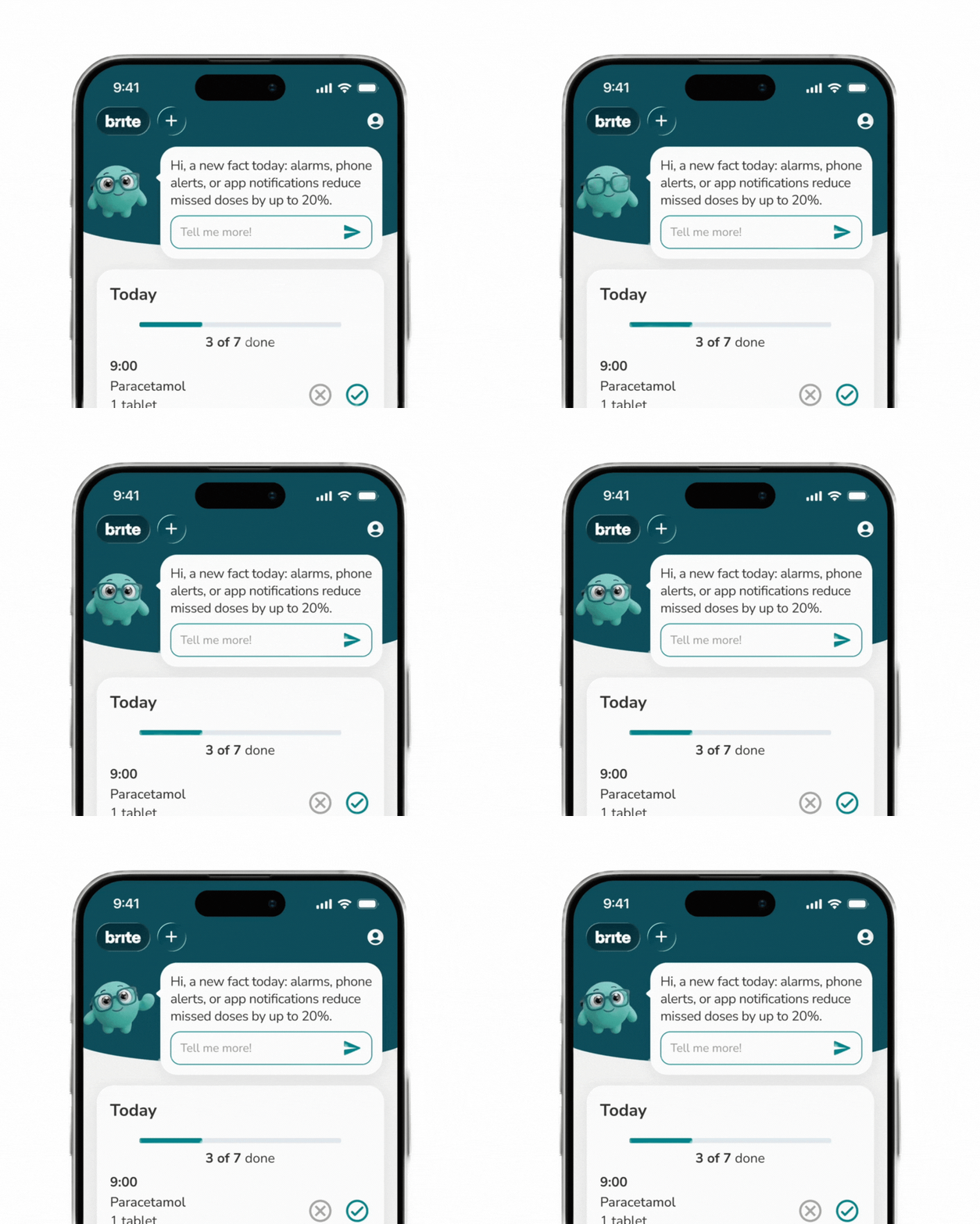
I finally understand my therapy. The app reminds me, answers my questions — and I don't feel alone with it anymore.
Enoxaparin
Enoxaparin: Giving the Thrombosis Injection Correctly — and Recognising Signs of Bleeding
Enoxaparin is a low-molecular-weight heparin given as a thrombosis injection under the skin — after surgery, with a plaster cast or bed rest, to treat thrombosis and pulmonary embolism, and during pregnancy. Many people inject it themselves after a short introduction. What matters is a clean technique and reliably recognising signs of bleeding and the rare but serious heparin allergy (HIT).
Low-molecular-weight heparin (LMWH), an anticoagulant; obtained from the intestinal lining of pigs
Dosage forms
Pre-filled syringes for injection under the skin, according to the SmPC of the original product from 2,000 to 10,000 IU (20 to 100 mg); multi-dose vials for hospital and dialysis use; several biosimilars as well
Half-life
About 5 hours after a single dose, up to about 7 hours after repeated doses; longer with impaired kidney function
Maximum daily dose
No fixed upper limit; for prevention usually 2,000 or 4,000 IU once a day, for treatment according to body weight. Your dose is set by the practice
Onset of effect
Maximum effect 3 to 5 hours after the injection; a stable level from the second day of treatment
Prescription status
Prescription-only medicine
Notable feature
Not interchangeable unit for unit with other low-molecular-weight heparins; contraindicated in heparin allergy (HIT); according to the SmPC, platelets are monitored
Table scrolls to the right
2. How it works: a brake on clotting factor Xa
Blood clotting is a chain of proteins that activate each other — at the end there is a firm plug of fibrin. The body has a natural counterpart to this, antithrombin. Enoxaparin strengthens this counterpart and thereby inhibits above all clotting factor Xa and, to a lesser extent, thrombin (factor IIa).¹ As a result, fewer new clots form and existing ones stop growing. Enoxaparin cannot dissolve a clot — the body does that itself over time.
Why you are given enoxaparin depends on the situation. Usually the aim is to prevent or treat thrombosis or pulmonary embolism. The article on the condition explains causes, symptoms and diagnosis; this article is about the injection itself and what to bear in mind with it in everyday life.
Prevention (prophylaxis): after surgery, especially on the hip and knee, with a plaster cast or splint on the leg, with bed rest due to an acute illness and in certain situations during pregnancy.
Treatment: of deep vein thrombosis and pulmonary embolism, often as a start before switching to tablets — with active cancer also for months.
Heart: in hospital for acute coronary syndrome (unstable angina, heart attack) together with antiplatelet medicines.
An honest assessment. Compared with classic, unfractionated heparin, enoxaparin has decisive advantages for use at home: its effect is very predictable, one injection a day is usually enough and it does not need regular clotting tests. The drawback is simply the injection — and the fact that any anticoagulation makes bleeding more likely.
3. Dosing: prevention or treatment
The dose is given in International Units (IU); many packs also state the amount in milligrams: 100 IU correspond to 1 mg. The following information reflects the SmPC and is not a dosing instruction. Which dose you inject and for how long is set by the treating practice or hospital.¹
Prevention at moderate risk (for example, minor surgery): 2,000 IU (20 mg) once a day, for at least 7 to 10 days and until you are sufficiently mobile again.
Prevention at high risk (for example, hip or knee replacement, cancer surgery): 4,000 IU (40 mg) once a day. According to the SmPC, after major orthopaedic surgery the prophylaxis is continued for up to 5 weeks, and after cancer surgery in the abdomen or pelvis for up to 4 weeks.
Prevention during an acute illness with bed rest: 4,000 IU once a day for at least 6 to 14 days; according to the SmPC, a benefit beyond 14 days has not been shown.
Treatment of thrombosis or pulmonary embolism: according to body weight, either 150 IU per kg once a day or 100 IU per kg twice a day, on average for about 10 days, before switching to tablets if appropriate.
With active cancer: twice a day at first, then once a day for up to 6 months; after that, the situation is reassessed.
Severely impaired kidney function (creatinine clearance 15 to 30 ml/min): a lower dose, for example 2,000 instead of 4,000 IU for prevention; with values below 15 ml/min, enoxaparin is not recommended according to the SmPC.
The German S3 guideline on thrombosis prophylaxis stresses that the type and duration of prevention depend on individual risk — on the type of surgery or illness and on personal factors such as previous thromboses, cancer, excess weight or age.² This is why the duration can differ between two people having the same operation. Ask until what date you should inject, and make a note of it.
4. Giving the injection correctly: step by step
This is the practical section of this article. Most people learn to inject in a few minutes at the hospital or practice. The following steps summarise the technique from the SmPC; what counts is the patient leaflet in your pack, because syringes and safety systems differ between manufacturers.¹
Get ready: wash your hands, check the syringe for damage and the expiry date, and find a comfortable position — ideally lying down or half reclining.
Choose the site: the skin of the abdomen at the front or back of the side, a little way from the belly button, alternating between left and right from day to day. Avoid scars, bruises and inflamed skin.
Leave the air bubble in: with pre-filled syringes, do not push out the small air bubble before the injection — otherwise active ingredient is lost. Only if the dose has to be adjusted to your weight is the excess discarded from graduated syringes, as instructed.
Pinch a fold of skin: gently take a fold of skin between your thumb and index finger and hold it throughout the injection.
Insert vertically: push the full length of the needle vertically into the skin fold, then press the plunger slowly all the way down.
Only then let go: pull the needle out, then release the skin fold. With syringes that have an automatic safety system, the needle is shielded by itself after the injection.
Do not rub: according to the SmPC, do not massage the injection site. Pressing lightly with a swab is fine.
Dispose of it safely: put used syringes in a puncture-proof container; how disposal is organised by your local authority is explained in the guide disposing of medications.
Fewer bruises — what helps. Let the syringe come to room temperature before use, change the sites consistently, inject slowly and do not rub the injection site. If you inject every day, you can note down the last site or use a simple rotation scheme. You may already know much of this from the guide injecting insulin correctly — important: with enoxaparin, the air bubble stays in the syringe.
Timing, storage, missed injections
A fixed time: inject at the same time every day if possible; with twice-daily dosing, about 12 hours apart. Meals make no difference.
Storage: according to the SmPC, do not store above 25 °C and do not freeze — so when travelling, do not leave it in a hot car; more under medications when travelling.
Forgotten: do not inject a double dose. Whether the missed injection is made up depends on how much time has passed and whether you inject once or twice a day — ask your practice or pharmacy.
Which side was it yesterday?
Log injection sites and times so that you never inject into the same spot twice and no dose is missed.
Most side effects affect the injection site or follow directly from the anticoagulation. According to the SmPC, bleeding, a drop or rise in platelets and raised liver values are among the most frequent findings.¹
At the injection site (common):bruising, pain, redness, swelling, small hardened areas. According to the SmPC, inflammatory nodules disappear after a few days and are no reason to stop treatment.
Bleeding (common): from harmless bleeding gums or nosebleeds to less frequent severe bleeding, especially if there are additional risk factors.
Liver values (very common): transaminases often rise, usually without symptoms; serious liver damage is uncommon to rare.
Skin and allergy (common): hives, itching, reddening of the skin; rarely severe allergic reactions.
Other: headache (common); rarely raised potassium, hair loss and, with use for more than three months, bone loss.
Watch the skin at the injection site. Painful, spreading redness, purple patches or dark, dying skin (skin necrosis) at the injection site are rare but serious. According to the SmPC, they lead to immediate discontinuation and can be a sign of HIT. Show such sites to a doctor the same day — with a photo if the skin is changing quickly.
6. Signs of bleeding and HIT: what you need to know
This is the most important section of this article. Used correctly, enoxaparin is well tolerated. However, you should know two complications so well that you recognise them straight away: serious bleeding and heparin-induced thrombocytopenia (HIT).
Bleeding: harmless or an alarm?
With any anticoagulation, you bleed more easily and for longer. A bruise on the tummy, slightly longer bleeding after shaving or occasional bleeding gums are usually harmless. Bleeding that comes from inside or does not stop is a different matter:
Black, tarry stools or blood in the stools — see black stool.
Vomiting blood or vomit that looks like coffee grounds, coughing up blood.
A nosebleed that does not stop after 20 minutes of pressure, unusually heavy periods.
Large bruises for no reason or many tiny pinpoint bleeds in the skin (petechiae).
A sudden severe headache, dizziness, visual disturbances, paralysis or confusion — possible bleeding in the brain.
Unusual weakness, paleness, breathlessness — possible hidden bleeding with anaemia.
Call 112 (emergency number in Germany) immediately. Severe bleeding or bleeding that cannot be stopped, vomiting blood, coughing up blood, black stools with weakness or circulatory problems, a sudden violent headache, paralysis or speech problems are emergencies. The same applies after spinal or epidural anaesthesia: according to the SmPC, back pain with numbness or weakness in the legs or problems passing urine or opening your bowels can point to bleeding around the spinal cord, which needs to be treated quickly.¹ Tell the ambulance service that you are injecting enoxaparin.
HIT: when heparin turns on the platelets
In heparin-induced thrombocytopenia type II, the immune system forms antibodies against a complex of heparin and a protein from the platelets. The platelets are activated and used up — paradoxically, the danger is not bleeding but new clots in veins and arteries. With low-molecular-weight heparins such as enoxaparin, this is less common than with unfractionated heparin, but it is possible.¹
Time window: according to the SmPC, a drop in platelets usually occurs between the 5th and 21st day of treatment; earlier if you have already been given heparin in the past few months.
Increased risk: after surgery, especially heart surgery, and in cancer.
Warning signs: a new thrombosis or embolism despite the injection (a swollen, painful leg, sudden breathlessness), painful skin changes at the injection site, allergic reactions immediately after the injection.
Monitoring: the SmPC recommends measuring the platelets before the start and then regularly during treatment. How often is set by the practice. If the count drops significantly, enoxaparin is stopped immediately and replaced with a heparin-free medicine.¹
If you have ever had HIT, you should state this in every medication plan and at every hospital admission: according to the SmPC, enoxaparin must not be used within 100 days afterwards or for as long as antibodies can be detected.¹ How to record such information permanently is explained in the guide recognising drug allergies.
7. Interactions
Enoxaparin is not broken down by the typical liver enzymes. Interactions therefore arise almost exclusively where other medicines also affect the stopping of bleeding — or raise the potassium level.¹
Combination
Consequence
What to do
Anti-inflammatory painkillers such as ibuprofen, diclofenac, naproxen; aspirin at pain-relief doses
Considerably increased risk of bleeding, especially in the stomach and bowel
According to the SmPC, stop them if possible; for pain, discuss alternatives such as paracetamol
Higher risk of bleeding, especially in the stomach
With caution, consider stomach protection
Potassium-raising medicines such as ramipril and other ACE inhibitors, sartans, spironolactone, potassium supplements
Raised potassium level, especially with diabetes or kidney impairment
Have potassium checked
Herbal remedies and food supplements that affect clotting, such as high-dose fish oil or ginkgo
Possibly more bleeding
Mention them at your practice or pharmacy
Table scrolls to the right
The most common everyday trap is the painkiller after surgery. If you inject enoxaparin after knee or hip surgery and also take ibuprofen or diclofenac for the pain, you increase the risk of bleeding — and after spinal or epidural anaesthesia also the risk of bleeding around the spinal cord.¹ This does not mean that the combination is never prescribed; but it should be a deliberate choice with a clear duration. The second trap is the switch to tablets: when switching to phenprocoumon, enoxaparin is continued until the INR is in the target range, whereas when switching to modern anticoagulants it is stopped at the time of the first tablet.¹ If you get confused here, you either inject twice or end up with a gap. An interaction check across your whole list, including over-the-counter painkillers and food supplements, brings clarity.
Alcohol is not listed as an interaction in the SmPC. However, larger amounts increase the risk of falls and injuries and irritate the stomach lining — both unfavourable while on anticoagulation. More under medications and alcohol.
8. Check-ups and alternatives
What is checked
Platelets: before the start and regularly during treatment, because of HIT.¹
Kidney values: with impaired kidney function, enoxaparin stays in the body longer; with severe impairment, the dose is lowered and, if necessary, the anti-Xa activity in the blood is measured.
Potassium: regularly with diabetes, chronic kidney disease or potassium-raising medicines.
What is not needed: according to the SmPC, the usual clotting values such as the prothrombin time (Quick value) or aPTT are not suitable for monitoring. Unlike with phenprocoumon, there are no regular INR checks.
Injection or tablet?
Tablets are now also available to treat thrombosis or pulmonary embolism. Alongside low-molecular-weight heparins, the German S2k guideline on venous thrombosis and pulmonary embolism describes above all the direct oral anticoagulants (DOACs) as options; which medicine is suitable depends on factors such as kidney function, cancer, pregnancy and other medicines.³
Medicine
Form
Typical use
Typical drawback
Enoxaparin and other LMWHs
Injection, once or twice a day
Prophylaxis after surgery and with a plaster cast, pregnancy, start of treatment, cancer
Long-term treatment, e.g. with a mechanical heart valve
Regular INR checks, many interactions
Table scrolls to the right
Biosimilars and switching products
Alongside the original product, there are several biosimilars containing the active ingredient enoxaparin. They are comparable in quality and effect; background in the guide understanding biosimilars. One particular point from the SmPC is important: enoxaparin must not be exchanged unit for unit with other low-molecular-weight heparins such as dalteparin, tinzaparin or nadroparin, because these active ingredients differ in their units and dosing.¹ If a different name suddenly appears on the pack after you leave hospital, ask at the pharmacy whether it is the same active ingredient at the same dose.
9. Special situations: pregnancy, kidneys, body weight, surgery
Pregnancy: according to Embryotox, low-molecular-weight heparins such as enoxaparin are the anticoagulants of choice during pregnancy; there is no indication that they cross the placenta, and even after use in the first trimester there were no signs of harm to the baby.⁴ According to the SmPC, there is no indication of transfer in the second and third trimesters; it is used when there is a clear medical indication.¹ If an epidural is planned for the birth, enoxaparin is paused beforehand — the timing is set by the team at the maternity unit. More under medications during pregnancy.
Artificial heart valves: according to the SmPC, enoxaparin has not been adequately studied in pregnant women with a mechanical heart valve; life-threatening valve thromboses have been reported. This situation belongs in specialist hands.
Breastfeeding: according to the SmPC, enoxaparin can be used while breastfeeding; the baby absorbs practically none of it via the milk.¹,⁴
Kidney impairment: with a creatinine clearance of 15 to 30 ml/min, the dose is adjusted; below that, enoxaparin is not recommended except during dialysis. Background: chronic kidney disease.
Low body weight: in women under 45 kg and men under 57 kg, according to the SmPC, fixed prophylaxis doses lead to higher levels and a greater risk of bleeding.
Severe excess weight: the risk of thrombosis is increased, and according to the SmPC the right prophylaxis dose for a BMI above 30 has not been conclusively established; the practice decides individually. See obesity.
Older people: no increased risk of bleeding at prophylaxis doses; at treatment doses, especially from the age of 80, it can rise.
Liver: with impaired liver function, caution is needed because of the increased tendency to bleed.
Surgery and injections into the back: before spinal or epidural anaesthesia, according to the SmPC, fixed minimum intervals after the last enoxaparin dose apply — at least 12 hours for prophylaxis doses and at least 24 hours for treatment doses. So before any procedure, say when you last injected; see medications before surgery.
Pork-derived ingredient: enoxaparin is obtained from the intestinal lining of pigs. If you have concerns for religious or ethical reasons, raise them openly; pointers in the guide medications and a vegan diet.
10. Enoxaparin experiences: what patients really ask
“My tummy is covered in bruises. Am I doing something wrong?”
Probably not. Bruises at the injection site are among the most common side effects and occur even with good technique. They become less frequent if you change the sites consistently, inject slowly, leave the air bubble in the syringe and do not rub afterwards. You should pay attention if bruises also appear where you have not injected, if they become unusually large or if an injection site becomes increasingly painful, discoloured or hard. Then a doctor needs to take a look.
“I don’t dare to inject myself.”
Many people feel that way, and it is no reason to go without prophylaxis. It helps to give the first injection yourself under guidance at the hospital or practice. The needles are very short and thin, and many people find the prick less bad than expected. If it still does not work out, relatives can learn to do it or a home care service can take over. Also ask whether a tablet is an alternative in your situation — that is possible after some operations.
“How much longer do I have to inject after my knee operation?”
That is decided by the hospital or practice and depends on the procedure, your mobility and your personal risk. After major orthopaedic surgery, the SmPC provides for extended prophylaxis of up to five weeks. Do not stop on your own just because you can walk a few steps again — the risk of thrombosis is increased especially in the first weeks after a joint replacement. Note down the end date from your discharge letter and clarify any open questions at your follow-up appointment.
“I forgot the injection yesterday evening.”
First of all: no double dose. With once-daily prophylaxis, a single missed injection is usually not an emergency, but it should be discussed promptly with your practice or pharmacy — they will tell you whether to make it up or carry on at the usual time. Over the following days, watch for warning signs of thrombosis such as a swollen, painful leg on one side or sudden breathlessness. A fixed time with a reminder prevents it from happening again.
Enoxaparin plus painkillers after surgery — do they go together?
The interaction check reviews your whole list for bleeding and potassium risks.
According to the SmPC, deep under the skin of the abdominal wall, alternating left and right. The full length of the needle is inserted vertically into a fold of skin, which is held until the end of the injection. The air bubble stays in the pre-filled syringe, and the injection site is not massaged afterwards.
The air bubble ensures that all of the active ingredient leaves the syringe and enters the tissue. According to the SmPC, if you push it out beforehand, you lose part of the medicine. Only with weight-adjusted doses is any excess discarded, following medical instructions.
Yes, according to the SmPC, bruises at the injection site are among the common side effects. Changing the site, injecting slowly and not rubbing help. Large bruises elsewhere on the body, painful discolouration at the injection site or other signs of bleeding need to be checked by a doctor.
Heparin-induced thrombocytopenia is a rare immune reaction in which the platelet count falls and new clots can form. It usually occurs between the 5th and 21st day of treatment. That is why, according to the SmPC, platelets are checked before the start and regularly during treatment.
That depends on the procedure and your personal risk. According to the SmPC, for at least 7 to 10 days at moderate risk and for up to 5 weeks after major orthopaedic surgery. The exact end date is set by the treating hospital or practice.
Yes, low-molecular-weight heparins are considered the anticoagulants of choice during pregnancy, because they practically do not cross the placenta. They are used when there is a clear medical indication. Before a planned epidural, enoxaparin is paused in good time.
Only after checking with your doctor. Ibuprofen and other anti-inflammatory painkillers increase the risk of bleeding together with enoxaparin; the SmPC recommends stopping them if possible. Paracetamol is often an alternative; the decision is made by the treating practice.
Summary of Product Characteristics (SmPC) for Clexane 2,000 IU – 10,000 IU / Clexane multidose (enoxaparin sodium), Sanofi-Aventis Deutschland, current version; other enoxaparin products and biosimilars accordingly — German source. fachinfo.de
S3 guideline on the prophylaxis of venous thromboembolism (VTE) (AWMF reg. no. 003-001, 2026 version) — German source. awmf.org
S2k guideline on the diagnosis and treatment of venous thrombosis and pulmonary embolism (Deutsche Gesellschaft für Angiologie, AWMF reg. no. 065-002, 2023) — German source. awmf.org
Embryotox — German pharmacovigilance and advisory centre for embryonic toxicology (Charité Berlin): enoxaparin in pregnancy and breastfeeding. Accessed 2026. embryotox.de
Thrombosis prophylaxis without gaps — with brite
Daily reminders, an injection-site log, your end date in view and an interaction check in one place. Free.
Medical disclaimer: This article is for general information and does not replace medical advice, diagnosis or treatment. Do not stop the thrombosis injection on your own before the agreed end date, and do not take additional painkillers or anticoagulants without checking with your doctor. If you have severe bleeding or bleeding that cannot be stopped, vomit blood, have black stools, a sudden violent headache, paralysis, back pain with numbness in the legs or signs of a new thrombosis, call 112 (emergency number in Germany) immediately. The choice of medicine and the dose are always set individually by the treating practice. Last updated: October 2026.