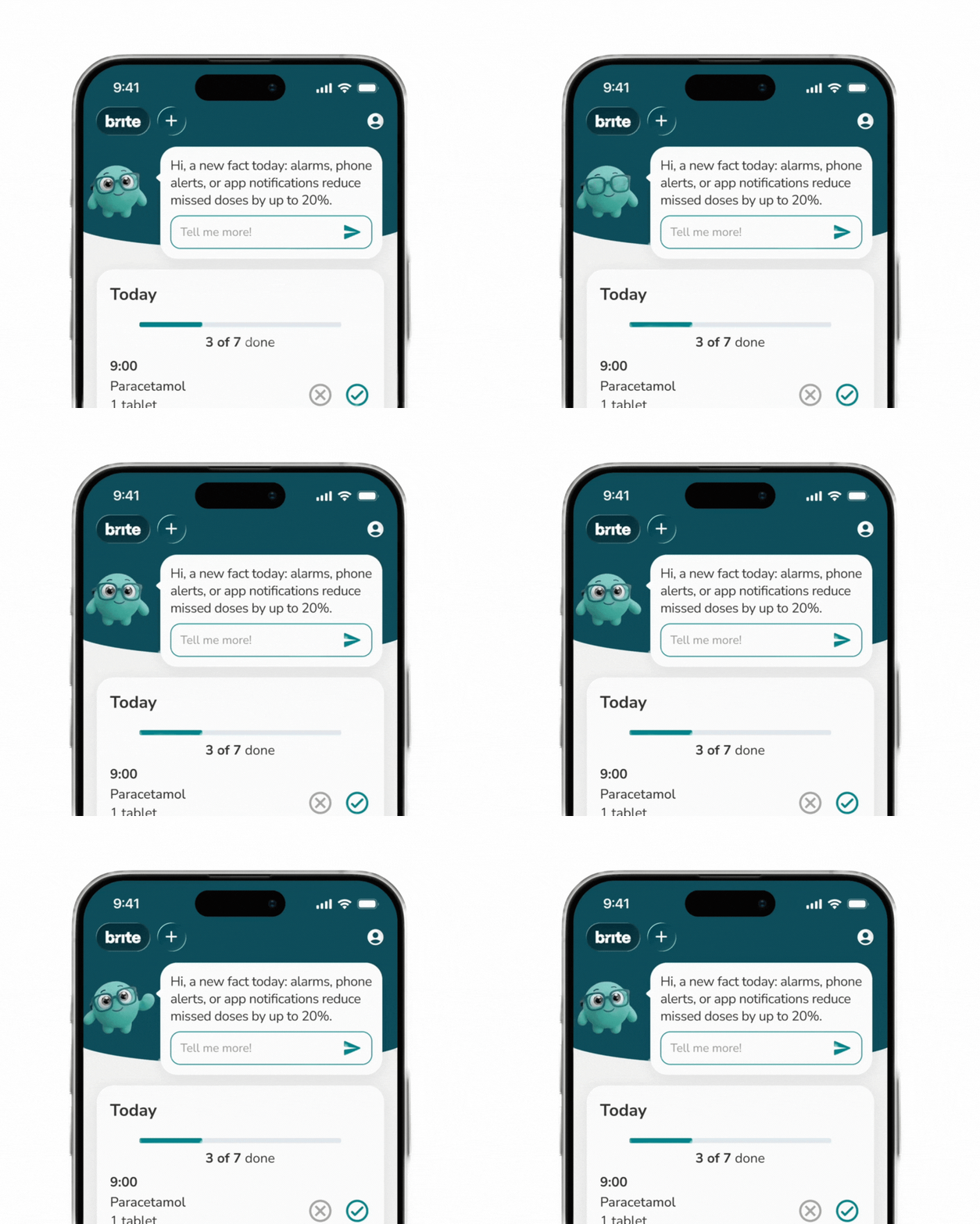
I finally understand my therapy. The app reminds me, answers my questions — and I don't feel alone with it anymore.
Valaciclovir
Valaciclovir: Treat Shingles Early, Drink Enough, Protect Your Kidneys
Valaciclovir is a precursor of aciclovir that the body absorbs much better — which is why three doses a day instead of five are enough for shingles. It slows the multiplication of herpes viruses, but helps most when treatment starts early. Because the active ingredient is excreted via the kidneys, drinking enough and a dose adjusted to kidney function are crucial.
Valaciclovir (as valaciclovir hydrochloride), a precursor (prodrug) of aciclovir
ATC code
J05AB11
Drug class
Antiviral (virustatic) from the group of nucleoside analogues; active against herpes simplex and varicella-zoster viruses
Dosage forms
Film-coated tablets, in Germany mainly 500 mg
Half-life
Valaciclovir is rapidly converted into aciclovir; its half-life is about 3 hours with normal kidney function and about 14 hours in end-stage kidney failure
Maximum daily dose
For shingles, 3,000 mg according to the SmPC (1,000 mg three times a day); higher doses only to prevent cytomegalovirus infection after organ transplantation under specialist supervision. Considerably less if kidney function is impaired
Onset of effect
Peak aciclovir levels after 1 to 2 hours; pain and blisters improve over several days
Prescription status
Prescription-only
Notable feature
Delivers 3 to 5 times more aciclovir into the blood than aciclovir tablets, hence fewer doses per day; the dose must be adjusted to kidney function, drink enough
Table scrolls to the right
2. How it works: aciclovir with an entry ticket
Valaciclovir itself is not yet an antiviral. It is aciclovir with the amino acid valine attached. This “entry ticket” means the gut absorbs the active ingredient far better via a transporter. In the gut and liver, the valine is then rapidly split off — what circulates in the blood is almost exclusively aciclovir. According to the SmPC, the bioavailability of aciclovir from valaciclovir is about 3.3 to 5.5 times higher than from aciclovir tablets.¹
From this point on, everything works as with aciclovir: in virus-infected cells, a viral enzyme (thymidine kinase) activates the active ingredient. The activated aciclovir is built into the virus's genetic material and stops it from being copied. Healthy cells barely activate aciclovir — which explains why it is so well tolerated.¹ If you are interested in creams, cold sores in general and the basics of the active ingredient, you will find them in the article on aciclovir. This article is about the tablet that shapes everyday life above all in shingles.
Strengths: because more active ingredient reaches the blood, three doses a day instead of five are enough for shingles. That makes it easier to complete the treatment — especially when pain is robbing you of sleep.
Limits: valaciclovir only slows viruses that are actively multiplying. It does not reach dormant viruses in the nerve ganglia. So it does not cure the infection; it shortens the acute flare — and the earlier it starts, the better.
The downside: aciclovir is excreted almost entirely via the kidneys. If kidney function is impaired or fluid is lacking, the active ingredient builds up. This explains the two serious risks: kidney damage and disturbances of the brain and nerves.
Putting it in context. Valaciclovir and aciclovir do not differ in how they work, but in how they are absorbed. Valaciclovir is not broken down via the liver's cytochrome P450 system — so classic enzyme interactions hardly play a role, while the kidneys matter all the more.¹
3. Dosing: very different depending on the type of herpes
The following information reflects the SmPC and is not a dosing instruction. Which dose is right for you is decided by the treating practice — depending on the condition, your immune system and, above all, your kidney function.¹
Shingles (herpes zoster) in adults: 1,000 mg three times a day on 7 consecutive days. With a weakened immune system, for at least 7 days and for a further 2 days after the blisters have crusted over.
Cold sores: a one-day regimen of 2,000 mg twice, about 12 hours apart (no sooner than 6 hours), started at the first signs such as tingling or burning. According to the SmPC, taking it for longer than one day brings no additional benefit.
Genital herpes: for treatment, 500 mg twice a day for 3 to 5 days, up to 10 days for a severe first infection; higher doses with a weakened immune system.
Long-term suppression of frequent recurrences: with an intact immune system, 500 mg once a day; after 6 to 12 months, it should be reassessed whether long-term treatment is still needed.
Cytomegalovirus prophylaxis after organ transplantation: very high doses for about 90 days — only in specialised centres.
Impaired kidney function: for every use, the SmPC sets out a stepwise reduction according to creatinine clearance (a measure of kidney performance) — for shingles, for example, from three doses a day to two or one. On dialysis, the dose is taken after the dialysis session.
Children under 12: according to the SmPC, safety and efficacy have not been established.
Older people: check kidney function before the first tablet. According to the SmPC, many reported overdoses involved older people and people with kidney impairment whose dose had not been adjusted.¹ In older age, a normal creatinine value can mask reduced kidney function. So ask whether your current kidney function was taken into account for the dose — more on this in the guide medications in kidney and liver disease.
4. Taking it day to day: early, regularly, with enough fluid
With shingles, treatment usually lasts only a week — which is exactly why every dose counts. This routine has proven itself in practice:
Start straight away. Fill the prescription the same day and take the first tablet immediately, not the next morning. According to the SmPC, treatment should start as soon as possible after diagnosis.¹
Spread the doses evenly over the day. With three doses, an interval of about eight hours works well, for example in the morning, in the afternoon and before bed. This keeps levels adequate through the day and night.
With or without food. A meal does not reduce absorption.¹ If you are prone to nausea, take the tablet with food and a large glass of water.
Drink enough throughout the day. The SmPC calls for adequate fluid intake, especially in older people and with impaired kidney function.¹ If you have to stick to a fluid limit because of heart failure or dialysis, agree the amount with your practice.
Take it to the end. Even if the blisters dry up after a few days, the prescribed duration is usually completed in full.
Missed a dose? Take it as soon as you notice, as long as the next one is not due imminently — but never two doses at once. You will find general rules in the guide missed a medication.
Morning, afternoon, evening — never miss a dose
The dose reminder keeps the rhythm, and your health history shows how pain and skin are developing.
Common: nausea, vomiting, diarrhoea, dizziness, skin rash including sensitivity of the skin to light, itching.
Uncommon: confusion, hallucinations, restlessness, tremor, reduced consciousness; abdominal discomfort, shortness of breath, hives, temporarily raised liver values, kidney pain and blood in the urine; a lack of white blood cells or platelets, especially with a weakened immune system.
Rare: seizures, speech and gait disturbances, psychoses, delirium, encephalopathy (brain dysfunction) up to coma; kidney dysfunction and acute kidney failure; severe allergic reactions.
According to the SmPC, the neurological side effects usually resolve after the medicine is stopped. They occur mainly with impaired kidney function, in older age and with very high doses.¹ For relatives, this means: if an older person on valaciclovir suddenly becomes confused, restless or sees things that are not there, this is not a “normal fever delirium” but a reason to seek medical advice immediately.
When you need help immediately. Sudden confusion, hallucinations, seizures or reduced consciousness, passing much less urine, flank pain, swelling of the face, lips or tongue with shortness of breath, and a widespread rash with blisters, pustules, fever or peeling skin are emergencies: call 112 (emergency number in Germany) immediately or go to the emergency department. According to the SmPC, after a severe skin reaction such as DRESS, AGEP, Stevens-Johnson syndrome or toxic epidermal necrolysis, neither valaciclovir nor aciclovir may ever be given again.¹ Record this in your allergy passport.
Headache and nausea can often be eased by taking the tablet with food and drinking enough. For headache, paracetamol is often the first choice; whether an anti-inflammatory painkiller is suitable also depends on your kidneys — more on this under interactions. You can report noticeable side effects yourself to the BfArM (Federal Institute for Drugs and Medical Devices).
6. Shingles: the time window and why drinking is part of the treatment
This is the most important section of this article. With shingles, two everyday questions decide the outcome more than the choice of product: when do you start — and do your kidneys stay in the safe zone while you are on it?
The 72-hour window
The viruses multiply mainly in the first days after the rash appears. After that, the flare is often already subsiding, and an antiviral has less to attack. The licensing studies therefore started valaciclovir within 72 hours of the onset of the rash; according to the SmPC, there are no data on a later start.¹ The German guideline recommends starting as early as possible, but still considers a later start justifiable in certain situations, for example if new blisters are still appearing, if the eye or ear is affected or if the immune system is weakened.² With a weakened immune system, the SmPC recommends treatment within one week of blister formation or at any time before complete crusting.¹
In practice, this means: burning, one-sided pain or abnormal sensations on a strip of skin, followed after one or two days by clustered blisters, should be seen by a practice the same or the next day — not after the weekend. At weekends, the out-of-hours medical service on 116 117 can help.
Who benefits most according to the guideline
The guideline recommends antiviral treatment above all when there is an increased risk of complications: at ages over 50, with shingles on the head and neck, with severe pain, extensive involvement, several affected skin segments and with a weakened immune system. It also considers treatment worth considering at low risk, however, because the medicines are well tolerated.²
Shingles on the face and eye. Blisters on the forehead, the tip of the nose or the eyelid, a red or painful eye and visual disturbances need an ophthalmologist's practice or eye hospital — on the same day. Shingles of the eye (zoster ophthalmicus) can threaten your sight. Involvement of the ear with hearing loss, dizziness or facial paralysis, as well as fever, headache with a stiff neck or confusion, also need to be checked immediately. According to the SmPC and the guideline, complicated cases are treated with aciclovir into a vein, not with tablets.¹,²
Why drinking is more than friendly advice
Aciclovir is excreted via the kidneys and, at high concentrations in the urine, can crystallise in the kidney tubules. The SmPC describes such crystal deposits and explicitly names adequate fluid intake as a protective measure.¹ Yet shingles strikes precisely the people who drink little anyway: older people, and people with fever, loss of appetite and pain who hardly feel like moving. Add heat, diarrhoea or water tablets, and things get tight.
Make drinking visible: put out a jug or bottle for the day and see what is left in the evening.
Keep an eye on your urine: very dark urine or passing much less water are warning signs — see dark urine.
Water tablets and blood pressure medicines: if you take diuretics or blood pressure medicines and are hardly eating or drinking at the moment, ask your practice whether anything needs adjusting for the treatment week. Do not pause anything on your own.
With chronic kidney disease: according to the SmPC, the dose is reduced, and kidney function should be known beforehand — see chronic kidney disease.
What valaciclovir does for the pain — and what it does not
According to the SmPC, valaciclovir shortens the duration of shingles pain.¹ Whether antivirals reliably prevent the dreaded post-herpetic neuralgia (nerve pain that persists for months after the skin has healed), however, has not been clearly shown: the guideline cites a systematic review according to which aciclovir did not significantly reduce the frequency of this nerve pain after four to six months. It therefore stresses early, consistent pain treatment as a building block in its own right.² That can be an ordinary painkiller, or, for nerve pain, medicines such as pregabalin, gabapentin or amitriptyline. So valaciclovir alone is not pain treatment — if you can hardly sleep despite the tablets, you should raise it.
Infection and vaccination
The fluid in the blisters contains varicella-zoster viruses. People who have neither had chickenpox nor been vaccinated against it can catch the virus and develop chickenpox — particularly risky for pregnant women, newborns and people with a weakened immune system. Until all the blisters have crusted over, the areas should stay covered.³ Valaciclovir does not prevent shingles from coming back. What can prevent it is vaccination with an inactivated vaccine, which the STIKO (Germany's Standing Committee on Vaccination) recommends from age 60 and earlier for certain underlying conditions; more on this in the guide vaccinations for adults.³
7. Interactions
Valaciclovir and aciclovir are not broken down by the liver enzymes of the cytochrome P450 system. Almost all relevant interactions therefore concern the kidneys: either a second medicine puts additional strain on the kidneys, or both active ingredients compete for the same route of excretion.¹
Combination
Consequence
What to do
Medicines that can damage the kidneys: aminoglycoside antibiotics, platinum-based chemotherapy, foscarnet, pentamidine
Higher risk of kidney damage
According to the SmPC, only with caution; check kidney function regularly
Aciclovir is excreted more slowly, and its level rises
Particular caution at high doses
Tenofovir and other medicines actively excreted via the kidney tubules
Levels of both active ingredients may rise
With HIV or hepatitis B treatment, have the combination checked by a specialist
Mycophenolate mofetil
Higher levels of aciclovir and of a mycophenolate breakdown product
Limited experience; monitoring at the transplant centre
Anti-inflammatory painkillers such as ibuprofen or diclofenac
No interaction listed in the SmPC, but they strain the kidneys when fluid is lacking and in older age
With kidney impairment or low fluid intake, clarify the choice of painkiller with your practice
Alcohol
No direct interaction described
Better avoided during shingles: alcohol draws fluid from the body and worsens sleep
Table scrolls to the right
According to the SmPC, particular caution is needed when higher doses — as in shingles — are combined with medicines that inhibit excretion via the kidney tubules.¹ In everyday life, it is often not the exotic combinations that matter but the sum: an older person with shingles who drinks little, takes a water tablet and swallows ibuprofen every day for the pain. Each medicine is justifiable on its own; together, the kidneys become the bottleneck. A check for interactions across the whole list makes such combinations visible — in the brite app via the interaction check.
8. Valaciclovir, aciclovir or brivudine? The comparison
Several tablets are available for shingles in Germany. The guideline names aciclovir, valaciclovir, famciclovir and brivudine as options for treatment with tablets; complicated cases are treated with aciclovir into a vein.² The differences lie less in effectiveness than in everyday use:
Active ingredient
Dosing for shingles
Strength
Typical drawback
Aciclovir (tablet)
5 times a day for 7 days
Long experience, very inexpensive, also well studied in pregnancy
Many doses, including at night; dose adjustment with kidney impairment
Valaciclovir
3 times a day for 7 days
Better absorption, fewer doses; in some studies shorter pain duration than aciclovir
Dose adjustment with kidney impairment, neurological side effects with overdose
Brivudine
Once a day for 7 days
Simplest dosing, no dose adjustment with kidney impairment
Life-threatening interaction with 5-fluorouracil and related cancer medicines; not with a weakened immune system
Table scrolls to the right
Brivudine deserves a warning of its own, because it is also prescribed for shingles: according to the guideline, it must not be given if 5-fluoropyrimidines such as 5-fluorouracil or flucytosine have been used in the previous four weeks — the combination can be fatal.² The same applies accordingly to related cancer medicines in tablet form. For people with cancer, valaciclovir or aciclovir is therefore usually the obvious choice. Valaciclovir does not have this interaction.
Compared with aciclovir, the main advantage of valaciclovir is the simpler dosing: five doses a day usually also mean a night-time dose, which is easily missed in everyday life. The guideline also reports studies in which valaciclovir shortened the duration of pain more than aciclovir.² Switching in the middle of treatment is rarely necessary — what matters more is that treatment starts early and runs its full course. Which medicine is suitable is decided by the treating practice based on age, kidney function, immune status and other medicines.
9. Special situations: kidneys, older age, pregnancy, weakened immunity
Kidney impairment and dialysis: the dose is reduced in steps according to kidney performance and, on dialysis, taken after the session. Kidney function should be monitored regularly, especially if it is changing rapidly, for example after a kidney transplant.¹
Older age: the SmPC recommends taking reduced kidney function into account, making sure of adequate fluid intake and watching closely for neurological side effects.¹ The guide medications in old age can help.
Liver: with mild to moderate cirrhosis of the liver, no dose adjustment is needed according to the SmPC; data are lacking for very high doses.¹
Pregnancy: registry data on valaciclovir and considerably more data on aciclovir do not indicate malformations. According to the SmPC, valaciclovir should only be used if the benefit outweighs the possible risks.¹ Embryotox counts aciclovir and valaciclovir among the well-studied antivirals in pregnancy.⁴ Whether shingles in pregnancy is treated at all is decided by the practice according to the risk; without risk factors, the guideline generally does not provide for treatment with tablets.² General information in the guide medications during pregnancy.
Breastfeeding: aciclovir passes into breast milk, but according to the SmPC the amount the baby receives is below 2% of a treatment dose for newborns. Use is possible with caution and when clearly necessary.¹,⁴
Weakened immune system: during chemotherapy, after transplantation, with advanced HIV infection or on strong immunosuppressants, shingles can be more severe and spread. Treatment then lasts longer, the response is closely monitored and, if the effect is insufficient, treatment is switched to an infusion.¹
Genital herpes and relationships: the virus can be transmitted even during long-term suppression. The SmPC additionally advises safer sex and avoiding sexual contact while symptoms are present.¹ More about the virus in the article herpes.
10. Valaciclovir experiences: what patients really ask
“The rash has been there for four days. Is valaciclovir still worth it?”
There is no blanket answer. There are no study data for a start after more than 72 hours, so the benefit is uncertain. A late start can still make sense — for example if fresh blisters are still appearing, the face or eye is affected, you are over 50 or your immune system is weakened. The practice decides based on how the skin looks. What matters is that you go anyway: pain treatment and the question of complications also belong in that appointment.
“Do I really have to drink that much? I hardly feel thirsty anyway.”
Yes, enough fluid is part of the treatment, because aciclovir is excreted via the kidneys and can crystallise in concentrated urine. The SmPC does not give a fixed number of litres — the point is not to run a deficit. Especially if you feel little thirst, a fixed routine helps: a large glass of water with every tablet, and further drinks spread over the day. With heart failure or dialysis, the fluid amount agreed with your practice applies.
“My mother has been completely muddled since starting valaciclovir.”
This should be checked by a doctor the same day. Confusion and hallucinations are among the known, if rare, side effects — especially in older age and with impaired kidney function, when aciclovir builds up. But they can also have other causes, such as a lack of fluid, an infection or painkillers. Do not simply stop the tablets; call the practice or the out-of-hours medical service instead; with seizures or severely reduced consciousness, call 112. In many cases, the symptoms improve after the dose is adjusted or the medicine is stopped.
Contrast agent, methotrexate, ibuprofen — is something putting extra strain on your kidneys?
The interaction check tests valaciclovir against your entire medication list.
Valaciclovir is a precursor of aciclovir that the gut absorbs better and that is rapidly converted into aciclovir in the body. As a result, about three to five times more active ingredient reaches the blood than with aciclovir tablets. That is why three doses a day instead of five are enough for shingles. The way it works is the same.
As early as possible after diagnosis. The studies started treatment within 72 hours of the onset of the rash; there are no data on a later start. In certain situations, for example with new blisters, involvement of the eye or a weakened immune system, the practice may still treat later.
The active ingredient is excreted via the kidneys and can crystallise in the kidney tubules when the urine is concentrated. A lack of fluid also increases the risk of kidney damage and neurological side effects. The SmPC therefore calls for adequate fluid intake, especially in older age and with kidney impairment.
The most common are headache and nausea, as well as dizziness, vomiting, diarrhoea and skin rash. Rarely, confusion, hallucinations or kidney failure occur, especially in older people and with impaired kidney function. Such signs, as well as severe skin reactions, must be checked by a doctor immediately.
Yes, until all the blisters have crusted over, the fluid in the blisters can infect people without protection against chickenpox. They then develop chickenpox, not shingles. Pregnant women, newborns and people with a weakened immune system in particular should avoid contact, and the areas should stay covered.
Yes, but only at an adjusted dose. Depending on kidney performance, the SmPC provides for fewer doses or smaller amounts, and on dialysis for taking it after the session. Many reported overdoses involved older people and people with kidney disease whose dose had not been adjusted.
Valaciclovir shortens the duration of pain in acute shingles. Whether antivirals reliably prevent long-lasting nerve pain, known as post-herpetic neuralgia, has not been clearly shown. The guideline therefore also relies on early and consistent pain treatment.
Summary of Product Characteristics (SmPC) for Valtrex 500 mg film-coated tablets (valaciclovir), GlaxoSmithKline, as of April 2026; likewise other valaciclovir generics — German source. fachinfo.de
S2k guideline on the diagnosis and treatment of zoster and post-herpetic neuralgia (German Herpes Management Forum of the Paul-Ehrlich-Gesellschaft and others, AWMF reg. no. 013-023, 2019; update in progress) — German source. awmf.org
Robert Koch Institute (RKI): RKI guide to chickenpox (varicella) and shingles (herpes zoster), and recommendations of the Standing Committee on Vaccination (STIKO) on herpes zoster vaccination. Accessed 2026 — German source. rki.de
Embryotox — German pharmacovigilance and advisory centre for embryonic toxicology (Charité Berlin): aciclovir and valaciclovir in pregnancy and breastfeeding. Accessed 2026. embryotox.de
A shingles week without gaps — with brite
Dose reminders, pain history, interaction check and digital medication plan in one place. Free.
Medical disclaimer: This article is for general information and does not replace medical advice, diagnosis or treatment. Have suspected shingles assessed by a doctor as early as possible, make sure you drink enough during treatment and, if your kidney function is impaired, take valaciclovir only at an adjusted dose. With shingles affecting the eye, sudden confusion, hallucinations, seizures, passing much less urine or a severe skin rash with blisters or fever, seek medical help immediately or call 112 (emergency number in Germany). The choice of medicine and the dose are always set individually by the treating practice. Last updated: November 2026.