Fever: What you can do & when it becomes critical

Fever is a powerful signal from your immune system – often a sign of an infection, but sometimes also a reaction to external factors or medication. When the thermometer rises, uncertainty often increases as well. Here you'll learn how to correctly interpret a fever, what can help you in everyday life, and how to use brite to check whether your medication or a new drug is affecting your body temperature.

Better understanding fever

In short & important: What you
can do right now

If your body temperature is elevated, these steps will help support your body and assess the situation:

Fluid check

Drink an additional half to one liter of water or tea for every degree of fever, as your body loses a massive amount of fluid in the heat.

Light fare

Soups or water-rich fruits like melons put little strain on the metabolism and provide important electrolytes.

Physical rest

Avoid any exertion. Your immune system needs all its energy for defense right now.

Check:

Have you started a new medication, or are you also suffering from a cough or stomach pain ?

Calf wraps & cooling

If you are not cold or shivering, lukewarm calf compresses can help to gently regulate your temperature.
Important: In case of extreme neck stiffness, confusion, shortness of breath or a skin rash that does not disappear when pressure is applied: Call emergency services (112) immediately.

What is a fever – and when do we start talking about one?

Fever (pyrexia) is not an illness, but an active defense mechanism. Many people wonder: When does one have a fever? In medicine, a body temperature of 38.0 °C or higher is considered a fever, and 39.0 °C or higher is considered a high fever. Ideally, the temperature should be measured rectally or in the ear, as these measurements are the most accurate. However, it's not just the number that's important, but also how you feel: Shivering (chills) indicates that the temperature is rising; sweating often signals that the body is trying to get rid of the heat.

Common causes of fever

Why does the temperature rise? These are the most common everyday triggers:

Infections (colds, flu, etc.)

Viruses and bacteria are the most common causes. They are often accompanied by body aches, sore throat, or a runny nose.

Fever without a cold

This is unsettling for many sufferers. Possible causes include inflammatory processes in the body, bladder infections, or overexertion. If the fever persists without clear symptoms, a medical examination after 2-3 days is advisable.

Fever at night

Body temperature fluctuates throughout the day and often reaches its peak in the evening. Night sweats and rising fever at night are typical of many infections.

Drug fever triggers

An often underestimated factor: Fever can be a side effect of medication or caused by drug interactions. This connection should be checked, especially when starting a new medication or changing the dosage.

Is it due to your medication? Get to the bottom of it now.

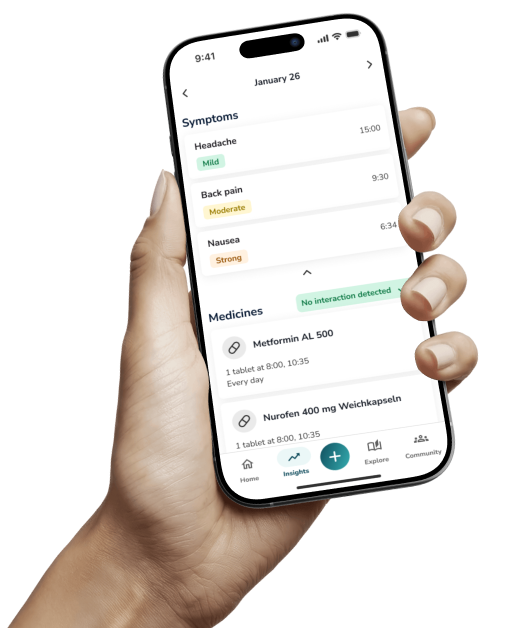
Especially when fever occurs without classic signs of infection, a look at your medication list is crucial. brite helps you bring structure to the analysis:
Digital medication plan : Record all medications and immediately see if the fever correlates with a new prescription or intake.
Drug interaction check : Find out if your combination of medications affects your immune system or your thermoregulation.
Dosage reminder : Make sure you take fever reducers at the correct intervals to avoid overdosing.

When does fever become critical? (Warning signs)

Fever usually resolves itself, but you should see a doctor or call emergency services if:

the fever rises above 40 °C or cannot be reduced despite medication.
Severe neck stiffness occurs (chin cannot be placed on chest).
You are confused or have impaired consciousness.
the fever lasts longer than three days (three-day fever).
New, dark skin spots or a rash appear.

Preparing for your doctor's appointment – ​​your checklist

To help your doctor quickly find the cause, prepare this information:

Course

How did the temperature change throughout the day?

Measurement method

Where and how often did you measure?

Accompanying symptoms

Do you also experience shortness of breath or nausea?

Medications

Bring your complete list from the brite app – over-the-counter fever reducers such as ibuprofen or paracetamol must also be on the list!

How Brite helps you keep track of everything

brite brings structure to your recovery phase and helps you find the cause of your elevated temperature:

Centralized medication plan for maximum safety during doctor's visits
Examination of drug interactions in drug-induced fever.
Stable routines thanks to the medication reminder.
Frequently asked questions about fever
When do I need to reduce a fever?
Why do I tremble when I have a fever?
Is it okay to shower if I have a fever?
Can antibiotics cause fever?
What to eat when you have a fever.
Wie kann mich der digitale Behandlungsbereich von
Welche Funktionen bietet mir der digitale Behandlungsbereich?
Woher kommen die Informationen und Inhalte?
Kann ich meine Ergebnisse auch mit meinem Arzt/meiner Ärztin teilen?
Sind meine Daten sicher?