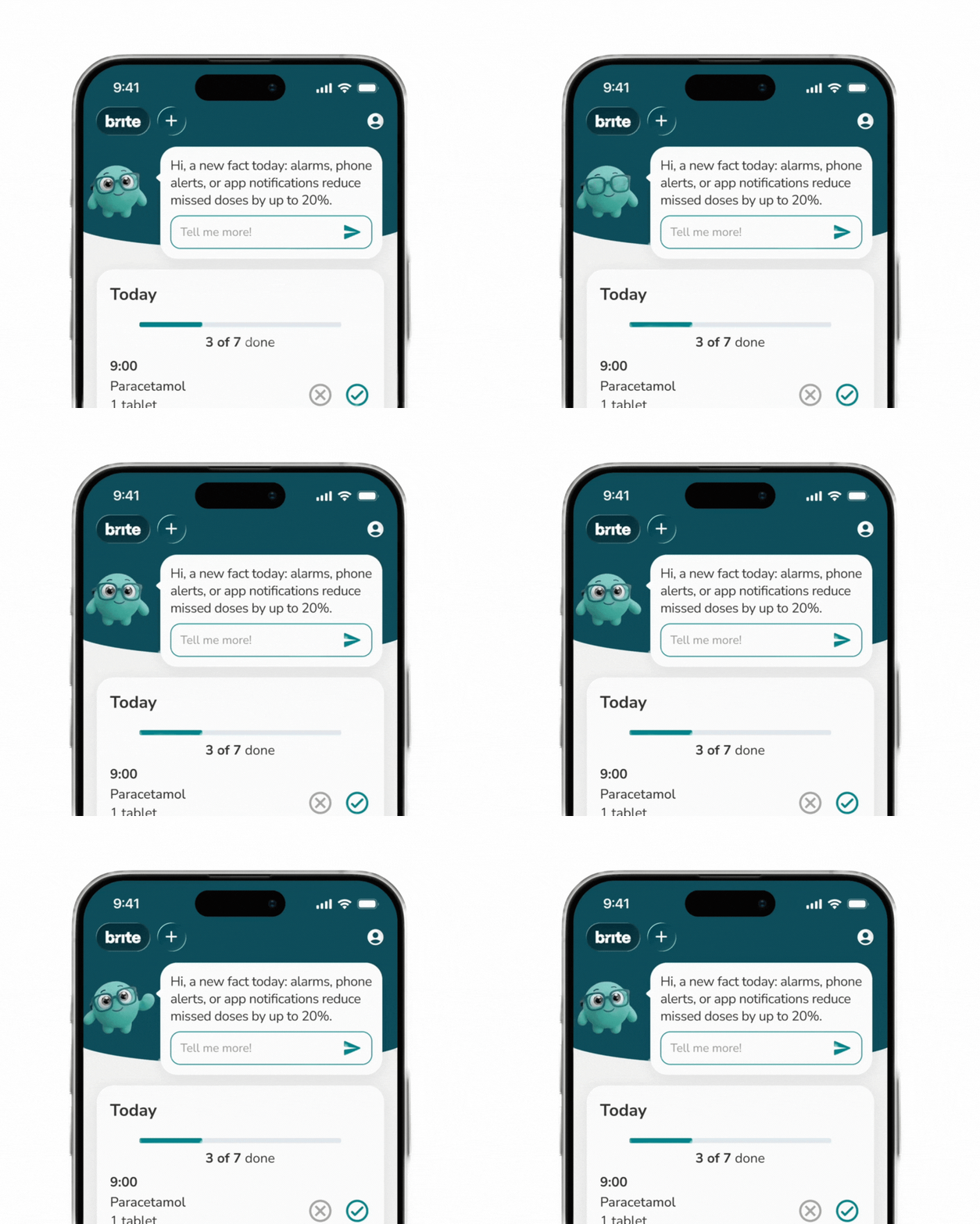
I finally understand my therapy. The app reminds me, answers my questions — and I don't feel alone with it anymore.
Digitoxin
Digitoxin: a Narrow Window — Know Your Levels, Potassium and the Signs of Toxicity
Digitoxin is a cardiac glycoside from the foxglove plant that slows the pulse in atrial fibrillation and supports the heart’s pumping power in heart failure. There is only a narrow window between an effective and a toxic dose, and the half-life is around one week. That is why level checks, a stable potassium value and recognising early signs of toxicity such as nausea or yellow vision are crucial.
Cardiac glycoside (digitalis glycoside) from the foxglove plant; long-acting
Dosage forms
0.07 mg tablets; according to the SmPC, the score line only makes swallowing easier and is not for dividing into equal doses
Half-life
On average 7 to 8 days; only about 7 to 10 per cent of the amount in the body is broken down each day
Maximum daily dose
No fixed maximum dose; according to the SmPC, the maintenance dose is often 0.07 to 0.1 mg daily and is set individually according to effect and level
Onset of effect
With loading, after a few days; without loading, a steady level is only reached after several weeks
Prescription status
Prescription-only medicine
Notable feature
Narrow therapeutic range; potassium deficiency makes the heart more sensitive; broken down mainly by the liver and therefore less dependent on kidney function than digoxin
Table scrolls to the right
2. How it works: pumping harder, beating more slowly
In the heart muscle cell, digitoxin inhibits an ion pump that moves sodium out and potassium in (sodium-potassium ATPase). As a result, more calcium is available in the cell and the heart muscle contracts more forcefully. At the same time, digitoxin slows the conduction of electrical impulses from the atria to the ventricles and thus lowers the heart rate.¹
Everything that is special about this active ingredient follows from this mode of action:
Strength: in atrial fibrillation with a fast pulse, digitoxin slows the ventricular rate without lowering blood pressure. In heart failure, it supports the pumping power.
Potassium as its opponent: potassium and digitoxin compete at the same pump. If there is too little potassium in the blood, digitoxin acts more strongly — up to the point of toxicity, even if the level is within the normal range.¹
Narrow therapeutic range: the same effect that slows the pulse and increases the excitability of the ventricles can trigger dangerous rhythm disorders if there is slightly too much of the active ingredient.
Long time in the body: more than 90 per cent of digitoxin is bound to blood proteins, it circulates between the liver and the gut, and it is broken down only slowly. Mistakes — in either direction — therefore have long-lasting effects.
What digitoxin is licensed for. According to the SmPC, for manifest chronic heart failure with reduced pumping function and for a fast, irregular pulse caused by atrial fibrillation or atrial flutter, including in attacks.¹ Digitoxin is an add-on medicine: it replaces neither beta blockers nor the other building blocks of heart failure treatment, and it does not protect against strokes in atrial fibrillation. The role it plays for you is decided by the treating practice.
3. Dosing: loading and a small maintenance dose
The following information describes the procedure according to the SmPC. It is not a dosing instruction — because of the narrow therapeutic range, the practice sets the dose particularly carefully.¹
Medium-speed loading: in practice, a higher dose is usually given for three days, 0.2 to 0.3 mg daily in adults, and for people over 60, for example, 0.07 mg three times a day.
Maintenance dose from the fourth day: often 0.07 to 0.1 mg once a day; over the age of 60, usually 0.07 mg.
Without loading: if treatment starts directly with the maintenance dose, the level rises slowly over several weeks — gentler, but the effect comes later.
Lower requirement in older age, with low body weight, an underactive thyroid, lack of oxygen in severe lung disease, inflammation of the heart muscle, a recent heart attack, and with combined severe liver and kidney impairment.
Switching from digoxin: according to the SmPC, only after a break of two days, or three days or longer with impaired kidney function, and with particularly close monitoring.
For long-term treatment, the SmPC recommends reviewing the need for digitalis through controlled attempts at stopping.¹ This is explicitly a step planned by a doctor — not something to try yourself.
4. Taking it: every day, no experiments
Once a day at the same time, according to the SmPC preferably after a meal, swallowed whole with plenty of liquid. The SmPC stresses that digitoxin should be taken regularly in the prescribed amount.¹
Never take a double dose. If you have forgotten a tablet, do not take it in addition to the next one. Because of the long half-life, a single gap hardly matters — a double dose, on the other hand, can exceed the narrow window. More under missed a medication.
Keep a gap from binding agents: colestyramine, colestipol, activated charcoal and some bulk-forming or bulking laxatives bind digitoxin. According to the SmPC, digitoxin is therefore taken two hours beforehand.¹
Blood test before the tablet. To measure the level, according to the SmPC, blood should be taken before the daily dose. So on the day of your check-up, take the tablet with you to the practice. Background in the guide medications before blood tests.
Pill organiser and plan. Because 0.07 mg tablets are easily mixed up or taken twice, a weekly pill organiser helps. An up-to-date medication plan shows everyone who treats you that you take a cardiac glycoside.
Supply shortage: do not switch on your own. In summer 2026, a supply shortage was reported for the only tablet product currently available in Germany, which is expected to last until early 2027.² If your pharmacy cannot supply digitoxin, do not simply stop it and do not swap it on your own for digoxin or a product from abroad — the dose and the break needed when switching are different. Talk to the practice and pharmacy early; information in the guide medication shortages.
One tablet a day — not none, not two
The pill reminder shows you at a glance whether today’s digitoxin dose has already been taken.
With digitoxin, side effects and signs of an overdose can hardly be separated. According to the SmPC, heart rhythm disorders are the most common; in principle any form is possible, favoured by disturbances of potassium, calcium and magnesium.¹
The typical signs
Stomach and bowel:loss of appetite, nausea, vomiting, abdominal pain, diarrhoea. According to the SmPC, nausea should be regarded as an early sign of too high a dose.
Eyes: altered colour vision in the green-yellow range, which according to the SmPC can occur even within the therapeutic range; also flickering or blurred vision.
Heart: extra beats, “double beats” (bigeminy), a slow pulse, conduction disorders up to and including AV block, ventricular tachycardia.
Nervous system and mind: headache, tiredness, sleeplessness, nightmares, restlessness, confusion, low mood, hallucinations, speech disorders, apathy.
Others: muscle weakness, enlargement of the breast tissue in men (usually reversible), allergic skin reactions; very rarely a blocked blood vessel in the abdomen.
In older people in particular, the signs are often non-specific: they eat less, are tired, seem confused or “not themselves”. This is easily put down to age or an infection. On digitoxin, the level should always be considered when such changes occur. According to the SmPC, any new heart rhythm disorder in a person treated with digitalis should be regarded as caused by digitalis until proven otherwise.¹
When to call 112 immediately. A very slow or markedly irregular pulse with dizziness, fainting or near-fainting, a racing heart, chest pain, severe confusion or hallucinations, and vomiting together with vision problems are emergencies: call 112 (emergency number in Germany) immediately and say that you take digitoxin. This also applies if several tablets have been taken by mistake — according to the SmPC, the signs of toxicity can continue to increase for up to twelve hours. More under medication overdose: what to do.
6. The narrow window: levels, potassium, risky situations
This is the core of this article. With hardly any other heart medicine are the effect and toxicity so close together. Three things decide which side of the window you are on: the level, the potassium value and situations that shift both.
The digitoxin level
According to the SmPC, therapeutic levels at steady state are usually between 10 and 30 ng/ml; values above 35 ng/ml in particular can be associated with signs of toxicity.¹ In the more recent heart failure trial DIGIT-HF, a lower target range of 8 to 18 ng/ml was deliberately aimed for.³ Which range applies to you is set by the practice — in heart failure, current recommendations tend towards the lower range.
When it is measured: after the dose has been set and a steady state has been reached, with every change in dose or accompanying medicines, with new kidney impairment or illness, and always when toxicity is suspected.
How it is measured: before the daily dose. According to the SmPC, other cardiac glycosides, spironolactone and its breakdown products can interfere with the test — if a value does not match how you feel, it is interpreted with caution.¹
What the level does not show: with potassium deficiency, an underactive thyroid or lack of oxygen, digitoxin can have toxic effects even at a “normal” level. A level within the target range is therefore no all-clear if you have symptoms.
Potassium: the most important lab value besides the level
A low potassium value makes the heart muscle more sensitive to digitoxin, and according to the SmPC hypokalaemia is even a contraindication. Potassium deficiency can be caused, for example, by water tablets such as furosemide or hydrochlorothiazide, diarrhoea, prolonged vomiting, laxative use, malnutrition or corticosteroids.¹ A potassium value that is too high is also unfavourable, because it promotes conduction disorders. A high calcium value and a low magnesium value are risky too. According to the SmPC, electrolytes and kidney function should be checked regularly. What the values mean is explained in the guide understanding blood values.
Less muscle mass, often lower potassium — and loss of appetite can itself be a sign of toxicity
Have the level and electrolytes checked
Table scrolls to the right
A short symptom log helps. Note down your pulse, appetite, nausea and anything unusual about your vision when something changes. Together with the latest level and potassium value, the practice can recognise more quickly whether digitoxin is behind it. This is particularly helpful when family members help to manage an older person’s medicines.
7. Interactions
Digitoxin is broken down via the liver enzyme CYP3A4 and is influenced by the transport protein P-glycoprotein. Interactions also arise via potassium balance and via medicines that slow the pulse further. The SmPC advises thinking of possible interactions with every additional treatment and checking the level if in doubt.¹
Combination
Consequence
What to do
Calcium given as an injection into a vein
Increased toxicity
Contraindicated — inform the emergency team
Potassium-lowering medicines: diuretics such as furosemide, torasemide or hydrochlorothiazide, excessive use of laxatives, corticosteroids such as prednisolone, amphotericin B
Potassium and magnesium deficiency, risk of toxicity
Weaker effect, rhythm disorders if potassium is too high; spironolactone can also interfere with the level test and lower the level
Check potassium; have lab values interpreted together
Colestyramine, colestipol, activated charcoal, kaolin-pectin, some bulk-forming laxatives
Less absorption, faster elimination
Take digitoxin two hours beforehand
Enzyme inducers: rifampicin, phenytoin, phenobarbital and other barbiturates
Digitoxin levels fall, the effect wears off
Check the level — also after the inducer has been stopped, as it will then rise again
Theophylline, sympathomimetics, tricyclic antidepressants, certain muscle relaxants used in anaesthesia
Rhythm disorders are promoted
Weigh up with a doctor; inform the anaesthesia team before operations
Table scrolls to the right
The most treacherous combination in everyday life is the one with water tablets: in heart failure they are almost always part of the treatment, and especially after a dose increase or with additional diarrhoea, potassium can fall unnoticed. A second trap is antibiotics: some raise the level by inhibiting enzymes or transporters, others because they wipe out gut bacteria that break down part of the digitoxin in some people.¹ After a week of antibiotics, nausea is therefore easily blamed on the infection — and yet it may be the level.
The SmPC does not list a specific interaction with alcohol; larger amounts can, however, play an indirect role via vomiting, diarrhoea and potassium balance, and they put additional strain on the heart in atrial fibrillation. With every new prescription — including over-the-counter laxatives and herbal products — it is worth taking a look at the interaction check. The basics are in the guide drug interactions.
8. Its place in treatment: digitoxin, digoxin and the DIGIT-HF trial
Digitalis is one of the oldest heart medicines and was controversial for a long time. With beta blockers, angiotensin receptor-neprilysin inhibitors such as sacubitril/valsartan, mineralocorticoid receptor antagonists and SGLT2 inhibitors such as empagliflozin, medicines are available today that improve survival in heart failure. In the guidelines, digitalis is regarded as a possible addition if symptoms remain despite this basic treatment, or for rate control in atrial fibrillation.⁴
What DIGIT-HF showed
The DIGIT-HF trial, led from Germany, studied digitoxin in addition to guideline-based treatment in more than 1,200 people with symptomatic heart failure and markedly reduced pumping function. Treatment started at 0.07 mg daily and was adjusted to a low target level. Over an average follow-up of three years, the combined endpoint of death or hospital admission for heart failure occurred less often on digitoxin than on placebo (39.5 versus 44.1 per cent). The individual components — death and hospital admission — were not significantly reduced on their own.³
To put it honestly: this is a moderate but relevant benefit, achieved with low dosing and regular check-ups. It is not a licence for high levels and no substitute for the other heart failure medicines.
Digitoxin or digoxin?
Feature
Digitoxin
Digoxin
Breakdown
Mainly in the liver, circulation between liver and gut; excreted via the kidneys and stool
Mainly excreted unchanged via the kidneys
Half-life
Around one week
Much shorter, prolonged in kidney impairment
In kidney impairment
Elimination hardly changed, as the liver and gut compensate
The dose must be adjusted to kidney function
After an overdose
Effects last particularly long
Wears off more quickly
Use
Mainly used in Germany
International standard
Table scrolls to the right
According to the SmPC, impaired kidney function alone has hardly any influence on the elimination of digitoxin; higher levels are only to be expected with combined liver and kidney impairment.¹ This is a real advantage in chronic kidney disease and in older age. Nevertheless, the SmPC names impaired kidney function as one of the most common triggers of digitalis toxicity — the kidneys still play a role via potassium, fluid and accompanying medicines.
9. Special situations: older age, kidneys, thyroid, pregnancy
Older age: sensitivity to digitoxin increases, potassium deficiency and dehydration are more common, and signs of toxicity such as loss of appetite or confusion are easily overlooked. The SmPC provides for lower doses for people over 60. More under medications in old age.¹
Kidneys: in very severe kidney impairment (GFR below 10 ml/min), according to the SmPC the requirement should be reviewed, especially at the start, and the dose reduced if necessary. Dialysis hardly removes digitoxin.
Thyroid: with an underactive thyroid, less digitoxin is needed, with an overactive thyroid possibly more. If thyroid treatment changes, digitoxin should also be reviewed.
Lung disease, recent heart attack, inflammation of the heart muscle: increased sensitivity — reduced dose and close monitoring.
Planned cardioversion: according to the SmPC, electrical cardioversion is contraindicated on digitoxin; the procedure is planned by cardiology.
Pregnancy: according to the SmPC, there is no evidence that digitalis glycosides at therapeutic doses harm the child; however, according to Embryotox (the German advisory centre for medicines in pregnancy), there are hardly any case reports on digitoxin itself, and most data concern digoxin. The requirement may rise towards the end of pregnancy and fall after the birth — close medical care is needed.¹,⁵
Breastfeeding: digitoxin passes into breast milk; as a precaution, the SmPC advises stopping breastfeeding. Embryotox recommends an individual decision and prefers digoxin where possible.¹,⁵
10. Digitoxin experiences: what patients really ask
“I’ve felt sick for days and have no appetite. Could that be the digitoxin?”
Yes, this is actually one of the most important early warning signs. According to the SmPC, nausea on digitoxin should be regarded as a sign of too high a dose. Of course, an infection may also be behind it — but a stomach bug in particular lowers potassium and can push the level into the critical range. So contact the practice promptly and have your level and potassium measured instead of waiting. If vision problems, confusion or an irregular, slow pulse are added, it is an emergency.
“Everything looks yellowish. Is that dangerous?”
Altered colour vision in the yellow-green range is a known side effect of digitalis and, according to the SmPC, can occur even at levels within the target range. It is still a signal that should be assessed by a doctor promptly, because it can also point to a level that is too high. Have other causes considered as well: visual disturbances have many causes, such as cataracts.
“My level is normal — so why should digitoxin still be to blame?”
Because the level is only half the story. With low potassium, low magnesium, high calcium, an underactive thyroid or lack of oxygen, the heart reacts more sensitively, so signs of toxicity can occur even with an unremarkable level. In addition, other glycosides or spironolactone can interfere with the test. The practice therefore always assesses the overall picture: symptoms, ECG, potassium, kidney function and level.
“My pharmacy doesn’t have digitoxin in stock. Can I skip it for a few days?”
Because of the long half-life, the level only falls gradually after a few missed days — but that is not a licence to take a break. Report a shortage early so that the practice and pharmacy can find a solution in good time, for example a delivery from abroad or a planned switch. Never swap digitoxin yourself for digoxin or for tablets from an old pack from a different manufacturer unless the dose and the switching break have been set by a doctor.
Water tablet, antibiotic, laxative — what do they do to your level?
The interaction check reviews your whole list for potassium and level traps.
According to the SmPC, therapeutic levels are usually between 10 and 30 ng/ml, and values above 35 ng/ml in particular can lead to signs of toxicity. In the heart failure trial DIGIT-HF, a lower target range of 8 to 18 ng/ml was aimed for. Your individual target range is set by the treating practice.
Typical signs are loss of appetite, nausea and vomiting, altered colour vision in the yellow-green range, tiredness, confusion and a slow or irregular pulse. Nausea is regarded as an early warning sign. If you faint, have a very slow or markedly irregular pulse or severe confusion, call 112 immediately.
Potassium and digitoxin act at the same ion pump in the heart muscle. With potassium deficiency, the heart reacts more sensitively, so signs of toxicity can occur even at a normal level. Water tablets, diarrhoea, vomiting and laxatives are common causes of potassium deficiency.
Both are cardiac glycosides with the same mode of action. Digitoxin is broken down mainly by the liver, has a half-life of around one week and is hardly affected by kidney impairment. Digoxin is excreted mainly via the kidneys, acts for a shorter time and has to be adjusted to kidney function.
According to the SmPC, blood should be taken before the daily dose. It is measured after the dose has been set, when the dose changes, with new accompanying medicines, kidney problems or suspected toxicity. On the day of the check-up, only take the tablet after the blood has been taken.
Do not take a double dose. Because of the long half-life of around one week, a single forgotten tablet usually hardly matters, whereas a double dose can exceed the narrow therapeutic window. Carry on with the next tablet at the usual time and ask the practice if in doubt.
In the DIGIT-HF trial, digitoxin given in addition to standard treatment moderately reduced the combined risk of death or hospital admission for heart failure in symptomatic heart failure with reduced pumping function. Low levels were aimed for. Digitoxin adds to the other heart failure medicines but does not replace them.
Summary of Product Characteristics (SmPC) for Digitoxin AWD 0.07 tablets (TEVA GmbH; version February 2018) — German source. fachinfo.de
APOTHEKE ADHOC: Packaging discontinued — digitoxin unavailable until 2027 (24 July 2026), citing the supply shortage report filed with the Federal Institute for Drugs and Medical Devices (BfArM) — German source. apotheke-adhoc.de
Bavendiek U et al. (DIGIT-HF Study Group): Digitoxin in Patients with Heart Failure and Reduced Ejection Fraction. New England Journal of Medicine 2025. nejm.org
German National Disease Management Guideline (Nationale VersorgungsLeitlinie) on chronic heart failure (German Medical Association, National Association of Statutory Health Insurance Physicians, AWMF; current version) — German source. leitlinien.de
Embryotox — German pharmacovigilance and advisory centre for embryonic toxicology (Charité Berlin): digitoxin in pregnancy and breastfeeding. Accessed 2026. embryotox.de
Keep digitoxin in the safe window — with brite
Daily pill reminder, level and potassium history, symptom notes for your doctor’s appointment and an interaction check. Free.
Medical disclaimer: This article is for general information and does not replace medical advice, diagnosis or treatment. Never take a double dose of digitoxin, do not stop it on your own and do not swap it for another cardiac glycoside without your doctor’s instructions. Nausea, loss of appetite, vision problems or new confusion on digitoxin should be checked by a doctor promptly; if you faint, have a very slow or markedly irregular pulse or have taken too many tablets, call 112 (emergency number in Germany) immediately. The choice of medicine and the dose are always set individually by the treating practice. Last updated: October 2026.